
PEX-A vs PEX-B: The Real Difference for Repiping
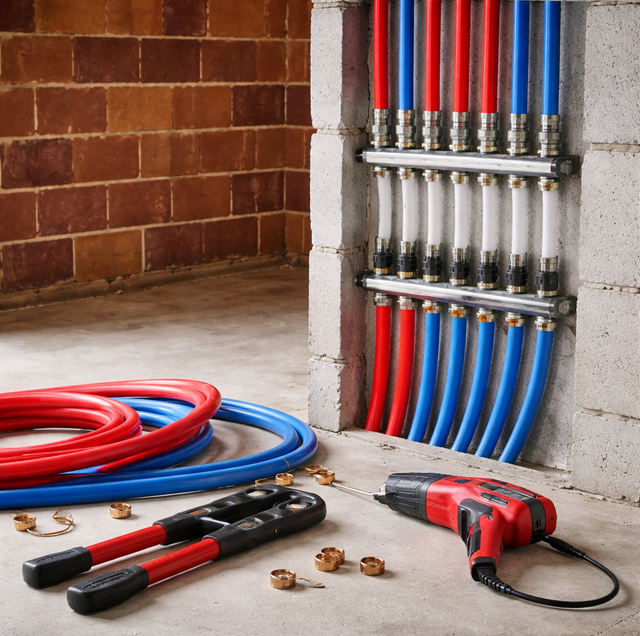
If you have gotten quotes for a whole-house repipe, you have probably seen the letters PEX-A and PEX-B and wondered whether one is a premium product and the other a corner cut. The short version is that both are the same base material, both carry the same potable-water approvals, and both will outlast the galvanized or polybutylene pipe they replace. The letter refers to how the pipe was manufactured, and that manufacturing choice ripples into flexibility, the fittings a plumber uses, and what the job tends to cost.
Quick Answer: PEX-A and PEX-B are both cross-linked polyethylene water pipes. PEX-A is made by the Engel method for the highest degree of cross-linking, making it the most flexible and giving it a thermal memory that lets a kink be repaired with a heat gun. PEX-B is made by the silane method, is stiffer and cheaper, and uses crimp or clamp fittings. Neither is universally "better"; the right choice depends on the layout and the installer's tooling.
What PEX Actually Is
PEX stands for cross-linked polyethylene. Ordinary polyethylene is a common plastic, but on its own it softens too much under hot water to serve as a supply line. Cross-linking chemically bonds the polymer chains together, so the finished pipe holds its strength and shape at the temperatures and pressures inside a home's water system. That is why PEX can carry hot water to a shower without sagging or ballooning the way uncross-linked plastic would.
The pipe is flexible, freeze-tolerant compared to rigid metal, and it does not corrode from the inside the way steel and older copper can. Those traits are why it has become the default for repiping older homes that have lost flow to interior scale or developed pinhole leaks.
The letter is the recipe, not a grade: PEX-A, PEX-B, and the less common PEX-C are not a quality ranking like a school report card. Each letter names the process used to cross-link the plastic. The processes reach slightly different degrees of cross-linking and leave the pipe with different handling characteristics, but all three are made to the same ASTM material standards and tested to the same NSF potable-water requirements.
PEX-A: The Engel Method
PEX-A is produced by the Engel, or peroxide, method, where cross-linking happens while the polyethylene is still molten. This yields the highest and most uniform degree of cross-linking of the three types, and it gives PEX-A two properties installers care about.
The first is flexibility. PEX-A is the softest and most bendable of the group, so it snakes through joist bays and around corners with fewer fittings. Fewer fittings means fewer potential leak points buried in a wall.
The second is shape memory. Heat the pipe, and it wants to return to its original round cross-section. That has a practical payoff: if PEX-A gets kinked during a rough day of installation, a plumber can warm the kink with a heat gun, and the pipe relaxes back to round instead of being cut out and rejoined. The same memory is what lets PEX-A work with expansion fittings, covered below.
The trade-offs are cost and handling. PEX-A generally sits at the higher end of the price range, and because it is so soft, it can be a little floppy to work with in open runs. Some contractors also point out that the expansion tooling it needs is a bigger up-front investment, which is part of why not every shop offers it.
PEX-B: The Silane Method
PEX-B is made by the silane, or moisture-cure, method. Cross-linking finishes after the pipe is formed, typically as it cures in a warm, humid environment. The result is a slightly lower degree of cross-linking than PEX-A and a stiffer pipe.
That stiffness is not a flaw. A firmer pipe can be easier to push through a long straight run without it wandering, and PEX-B is the most widely stocked type on the shelf, which makes sourcing and repairs simple almost anywhere. It is also the more budget-friendly option, which matters on a whole-house job with hundreds of feet of pipe.
Some manufacturers claim PEX-B resists bursting slightly better under freeze conditions, and a few point to higher chlorine tolerance in certain product lines. Treat those as manufacturer claims rather than settled fact; independent findings are debated, and real-world durability depends heavily on how the pipe is installed and protected. What is not debated is the handling difference: PEX-B does not have the thermal memory of PEX-A, so a kink cannot be heated back to round. A kinked section of PEX-B has to be cut out and rejoined with a coupling.
Why the Fittings Are the Real Divide
The manufacturing method decides which connection system the pipe uses, and that is where the daily difference between the two shows up.
PEX-A uses expansion fittings: A special tool stretches the end of the pipe, a fitting is inserted, and the pipe's shape memory shrinks back down tight around it. Because the pipe grips the fitting from the outside, the fitting sits closer to the pipe's inside diameter, so it restricts flow less at each connection. On a home already fighting low pressure, keeping the inside path wide at every joint helps preserve flow.
PEX-B uses crimp, clamp, or push-fit fittings: A crimp ring or a cinch clamp squeezes the pipe onto an insert fitting that sits inside the pipe. Because the insert takes up some of the interior space, each fitting narrows the bore a little more than an expansion connection does. Push-fit fittings, which slide on without a tool, also work with PEX-B and are handy for tight repairs, though many plumbers reserve them for accessible spots rather than sealing them permanently inside a wall.
Think of the two fittings like two ways to join a garden hose: one clamps a collar over the outside, the other pushes a barb into the middle. Both hold water, but the barb takes up a little room the water used to flow through. Across a whole house, those small restrictions add up differently, which is one reason expansion systems get specified where flow is a priority.
None of this makes one system unsafe. A crimp joint installed correctly with the matching ring and a calibrated tool is a proven, long-lived connection. The key rule is that the fitting and tool must match the PEX type and the maker's instructions; mixing a fitting meant for one system onto the wrong pipe is where failures start.
Standards, Chlorine, and Sunlight
Both types are made to the same ASTM standards for PEX tubing and are certified to NSF/ANSI potable-water standards, so both are approved to carry drinking water. Both also far outlast the old galvanized steel that clogs with rust and the polybutylene that became known for failures. Swapping either type in for those aging materials is a durable upgrade.
Two care points apply to all PEX regardless of letter. First, chlorine and chloramine in treated water slowly age the pipe from the inside, which is why higher-chlorine-resistance ratings exist on some product lines; matching pipe to local water chemistry is a conversation worth having with your installer. Second, and more absolute: PEX must be kept out of sunlight. Ultraviolet light degrades it, so it cannot run exposed outdoors or sit in a sunny window, and stored pipe should stay in its packaging. A run that will see any daylight needs a UV-rated sleeve or a different material.
One more hard rule that applies to both: PEX should not connect directly to a water heater. The tubing needs a required metal transition fitting or a short section of connector rated for that heat, because the water leaving a heater is hotter than the point where PEX runs continuously without help.
How to Actually Choose
The honest answer is that the installer often matters more than the letter. A shop that owns and knows the expansion tooling will give you a clean PEX-A job; a shop built around crimp tooling will give you a clean PEX-B job. A good install in either type beats a rushed install in the other. Because repiping runs inside finished walls, this is licensed-plumber work regardless of which pipe you pick, so the crew's experience is the variable that changes the outcome most.
If your home is fighting flow and pressure and has a complex layout with many turns, PEX-A's flexibility and full-bore fittings are worth asking about. If budget and broad parts availability lead the priorities, PEX-B is a proven, economical choice. There is also PEX-C, made by the electron-beam method, which sits between the two in stiffness and is less common in residential repiping; you may see it, but the A-versus-B decision is the one most homeowners actually face.
Ask your plumber which system they install, why they prefer it for your layout, and how they handle the transitions to your heater and fixtures. The answers tell you more about the finished job than the letter on the coil.
Frequently Asked Questions
Yes. The pipes are compatible with each other, and a home can run one type on a repipe and still tie into an existing stub of the other. The catch is at the connection: each joint must use the fitting system and tool matched to the pipe being connected at that point, so a plumber will use an expansion fitting on the PEX-A end and a crimp or push-fit transition where it meets PEX-B, rather than forcing one system onto both.
Both are sold to the same SDR-9 dimension standard, so a half-inch line of either measures close to the same straight-pipe bore. The practical difference is at the joints, and it depends on which PEX-B fitting is used: a copper crimp or stainless cinch insert steps the bore down at each connection, whereas the newer PEX-B expansion fittings (some brands now make them) behave more like PEX-A. A rule of thumb plumbers use: on a short branch to a single fixture the restriction is trivial, but on a long trunk line feeding many fixtures through a dozen insert fittings it is worth stepping up one pipe size to keep pressure steady at the far end.
New PEX can impart a faint taste for the first days or weeks, more noticeable in water that has sat still in the line. Running the taps to flush the system usually clears it as the tubing conditions. If a strong taste lingers well past initial use, that points to the specific product or a water-chemistry issue worth raising with your installer rather than a fault common to all PEX.
It can happen. Rodents occasionally gnaw plastic tubing, and PEX is softer than copper, so in spaces with a known pest problem some installers route pipe away from likely runways or add protective sleeving at exposed points. This is a placement and pest-control question, not a reason to rule out PEX, since the same crews that repipe with it deal with these situations routinely.
PEX needs more frequent support than rigid pipe because it is flexible; unsupported horizontal runs can sag and trap air or slap against framing when water moves. Installers use spaced clips or hangers and leave a little slack for the pipe's expansion and contraction with temperature, which also quiets the ticking sound rigid systems sometimes make. Proper spacing per the maker's guide is part of a correct install in either type.
Color is a convention, not a material difference. Red and blue are commonly used to mark hot and cold lines during installation, and white is used for either. The color does not change the pipe's rating or its A-versus-B classification, so a red PEX-B and a red PEX-A are still different pipes; always confirm the type from the printing on the tubing rather than its color.
Ask a repipe specialist which PEX fits your home before you commit—a matched pipe and installation protect your flow for decades. PEX Plumbing & Repiping serves Portland, Beaverton, and Tigard. Call (971) 232-3079.
