
What Causes Pinhole Leaks in Copper Pipe? 6 Real Culprits
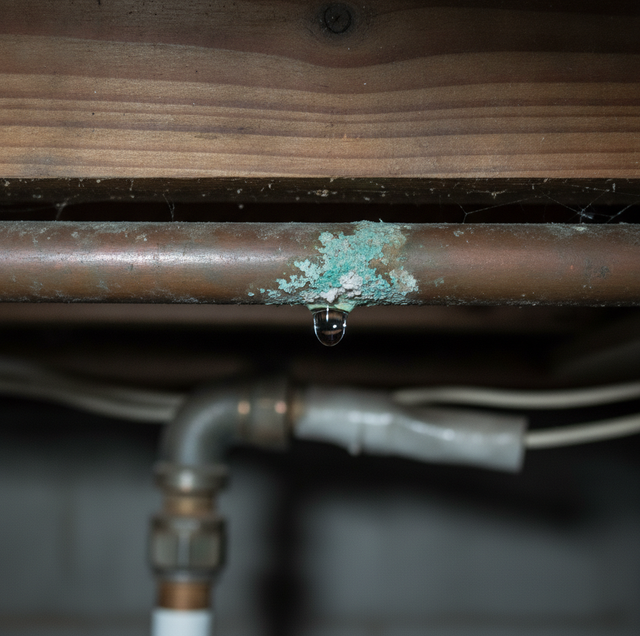
Quick Answer: Pinhole leaks are tiny perforations that corrode through copper pipe from the inside out, driven by pitting corrosion. The usual causes are aggressive water chemistry (low pH or acidic water), high chlorine or chloramine and dissolved oxygen, high water velocity and turbulence that erode the pipe wall at tight bends and undersized runs, sediment and debris, stray electrical current from poor grounding, and simple age. A green or blue-green crusty stain with a bead of water marks the spot. Because the cause is usually systemic (the water itself or the way the whole run was sized), one pinhole often means more are on the way, which is why a repipe with PEX frequently makes more sense than chasing patch after patch.
Copper has a reputation for lasting decades, so the first pinhole leak tends to catch people off guard. A pipe that looks solid on the outside can be quietly eating through its own wall from the water side, and by the time a drip shows up, the metal is already paper-thin in that spot. Understanding what drives that corrosion tells you whether you are dealing with one unlucky fitting or a plumbing system that is going to keep springing leaks. Here is what actually causes those tiny holes.
Pitting Corrosion: Why the Hole Forms From the Inside Out
A pinhole leak is not the pipe wearing evenly thin. It is pitting corrosion, a localized attack where corrosion concentrates on one microscopic spot instead of spreading across the surface. On the water side of the copper, a tiny pit starts to dig in. It works downward through the wall while the rest of the pipe stays healthy, which is why the outside can look perfect right up until it weeps.
That is also why these leaks are so easy to miss. The perforation is often smaller than a pin, and it may seep rather than spray. Inside a wall or above a finished ceiling, the water can travel along a joist and show up feet away from the actual hole. The corrosion is doing its work from the inside, so nothing on the visible surface warns you until the pit finally breaks through.
Aggressive Water Chemistry and Low pH
The single biggest driver is the water running through the pipe. Water that is acidic (low pH) is chemically aggressive toward copper and slowly dissolves the protective oxide layer that normally shields the metal. Once that layer is stripped, the bare copper underneath is open to attack, and pits get a foothold.
Naturally soft water is relevant here. Water that is naturally soft and on the low-mineral side has less buffering capacity to resist swings toward the acidic end. Water utilities adjust chemistry to keep it in a safe range, but private wells and older service situations vary, and the mineral content that would otherwise coat and protect the pipe interior is thin. A water test that measures pH, alkalinity, and hardness is the way to know whether your water is sitting in the corrosive zone, rather than guessing.
Chlorine, Chloramine, and Dissolved Oxygen
Treated water carries disinfectants, and those disinfectants are oxidizers. High levels of chlorine or chloramine push the water's chemistry in a direction that feeds copper corrosion, and dissolved oxygen does the same. Oxygen and oxidizing disinfectants give the pitting reaction the ingredients it needs to keep cutting into the metal.
This is one reason leaks sometimes cluster on the hot-water side. Heating water drives dissolved gases out of solution and changes how disinfectant byproducts behave, and hot lines see more aggressive conditions overall. When several pinholes turn up, and they are mostly on hot runs, the chemistry of the heated water is often part of the story.
Erosion Corrosion at High Velocity and Tight Bends
Not every pinhole is purely chemical. Water moving too fast through a pipe scours the interior wall mechanically, a failure mode called erosion corrosion. When flow velocity is high, the moving water strips away the protective oxide film faster than it can reform, exposing fresh copper to attack over and over in the same place.
The damage concentrates wherever the flow gets turbulent. Tight elbows, sharp bends, sloppy solder that leaves a burr or a bead protruding into the bore, and undersized pipe that forces the same volume of water through a smaller opening all speed the water up and make it churn. You will often find these leaks just past a fitting, on the downstream side of a bend, where the turbulence peaks. Undersized supply lines are a common installation shortcut that shows up years later as erosion pinholes at every elbow.
Sediment, Debris, and Stray Electrical Current
Grit and sediment traveling through the line act like a mild abrasive, wearing away at the protective film and giving pits a place to start, especially where debris settles in low spots or collects against a fitting. It compounds the erosion problem by keeping the interior surface roughed up.
A lesser-known cause is electrical. Copper pipe is a good conductor, and if a home's electrical grounding is done through the plumbing or if stray current finds its way onto the pipe, that current can drive corrosion at the point where it leaves the metal. This is subtle and easy to overlook, but a plumber or electrician who finds pinholes with no obvious water-chemistry explanation will sometimes check the grounding and bonding, because stray current can perforate a pipe that the water alone would not have.
Age and Thinning Pipe Walls
Time matters on its own. Copper installed decades ago has been exposed to whatever the water has been doing that entire time, and the wall gets thinner as corrosion slowly advances. Thinner walls give the pitting less material to chew through, so an older system that shrugged off aggressive water for years can start failing in a short window once the metal reaches a critical thinness. Older homes with original copper are squarely in this category; the pipe was fine for a long time precisely because it started out thick.
Why One Pinhole Usually Means More Are Coming
Here is the part that changes the decision. The causes above (water chemistry, disinfectant levels, velocity from undersized runs) are not local to a single spot. They act on the entire plumbing system at once. If the water is corrosive, it is corrosive in every copper line it touches. If the runs were sized too small, every elbow sees the same erosive flow. So the first pinhole is rarely a coincidence; it is the first spot to reach failure in a system where many spots are corroding at similar rates.
That is what separates a one-time repair from a pattern. Soldering a patch over one hole does nothing about the conditions that made it, and homeowners who chase leak after leak eventually find they are repairing faster than they can keep up. When pinholes start repeating, the honest fix is usually a repipe. PEX does not corrode the way copper does; it is a polymer, so acidic water, chlorine, and erosion at bends do not eat through it the way they do metal. Replacing the corroding copper with PEX ends the cycle instead of postponing the next leak.
Putting the Clues Together
A pinhole leak in copper is a message about the whole system, not just the pipe it appeared in. The green stain and the damp spot tell you where the metal finally gave out; the water chemistry, the flow design, and the age of the pipe tell you why, and whether the next one is already forming somewhere behind the drywall. If a leak is truly isolated and the pipe is otherwise young and sound, a clean repair can hold. When the leaks repeat, or a water test shows aggressive chemistry, that points past patching toward replacing the system with a material the water cannot corrode.
Frequently Asked Questions
Look for the early tells before there is standing water. A pinhole often announces itself with a small green or blue-green crusty deposit (verdigris) forming on the outside of the pipe as trace copper reacts with air and moisture. You may see a single bead of water clinging to the underside of a line, a faint hissing or ticking near a pressurized pipe, or a small discolored, damp patch on a ceiling or wall that slowly grows. Running a dry paper towel along the underside of accessible copper and checking for a wet streak is a quick home check. Catching it at the stain stage instead of the collapse stage is the difference between a spot repair and drywall demolition.
A soldered patch or a coupling over a cleaned section is a legitimate repair for a truly isolated leak, and, done well, it can hold for years. The catch is that soldering requires a bone-dry pipe, and getting copper dry when the whole line is charged with water is the hard part. Many "patches" that failed quickly failed because the joint never fully sealed on wet metal. More importantly, the patch fixes the hole, not the cause. If corrosive water or high-velocity flow perforated one spot, the same conditions are working on the pipe an inch away, so patch longevity is really a question about the rest of the run, not the repair itself.
Because PEX is a plastic, the inside-out corrosion that pinholes copper simply cannot happen to it, so it removes that failure mode rather than delaying it. What it does have are a few different care points worth knowing. PEX must not sit in long-term direct sunlight, since UV degrades it, which is why exposed runs get sleeved or kept out of light. The fittings matter too: a proper repipe uses the fittings and crimp or expansion rings matched to that PEX system, since a leak in a plastic system almost always starts at a bad connection rather than in the tubing. And where PEX ties into existing copper or a water heater, those transition fittings are the spots to keep an eye on.
A water test measures the specific properties that make water aggressive to copper: pH (acidity), alkalinity (the water's ability to buffer against pH swings), hardness, and often chlorine or chloramine and dissolved oxygen levels. Water that reads low on pH and alkalinity has little to protect the pipe and is the classic pinhole profile. The test matters because you cannot see or taste corrosive chemistry; water can look clear and still be dissolving copper. If a test confirms aggressive water, it also tells you that treating the water or switching pipe material, not just repairing pipes, is what actually addresses the problem.
Hot water is chemically busier than cold water. Heating drives dissolved oxygen and other gases out of solution and shifts how disinfectant byproducts behave, and warmer water generally speeds up corrosion reactions. Hot lines also tend to see thermal cycling (expanding and contracting as the water heater runs and rests), which stresses the pipe and can flake off the protective interior film. When a home's leaks show up mostly on the hot side while the cold runs stay dry, the heated water's more aggressive conditions are usually why.
It can, and it is one of the most overlooked causes. If a house uses the copper water pipe as part of its electrical grounding path, or if a wiring fault or a neighboring service puts stray current onto the plumbing, that current can drive corrosion where it exits the metal, punching holes the water alone might never have made. The tell is pinholes that do not fit any water-chemistry explanation, good water, reasonable flow, yet leaks anyway. In that case, it is worth having the grounding and bonding checked, because no amount of pipe repair will stop corrosion that electricity is feeding.
Chasing copper pinhole leaks? — Get a water assessment and a one-day whole-home PEX repipe from a local repiping specialist. PEX Plumbing & Repiping serves Portland, Beaverton, and Tigard. Call (971) 232-3079.
