
Our Plumbing and repiping blog
Trenchless vs. Traditional Water Line Replacement
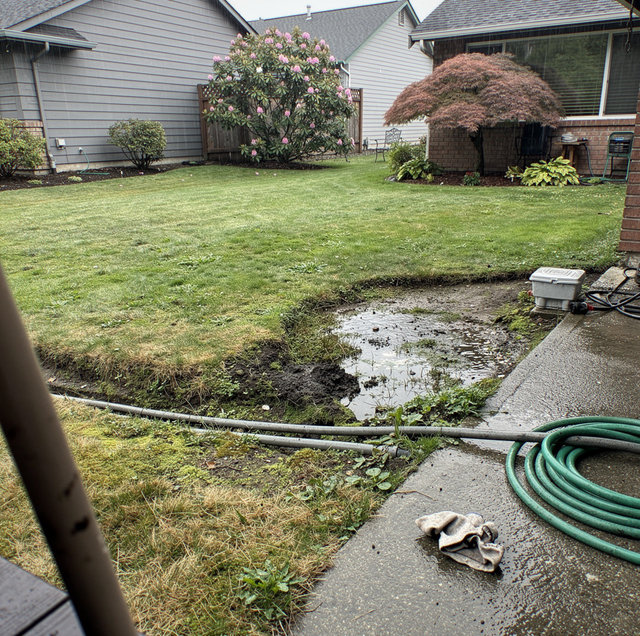
A failing water line rarely announces itself with a single dramatic event. More often you notice a string of small clues: water pressure that has dropped for no clear reason, a wet patch in the yard that never dries out, a spike on your water bill, or discolored water when you run an outside spigot.
Repair or Repipe? How to Know When Patching Stops Working
Every plumbing system eventually asks its owner a question: keep patching, or replace the whole thing.
What to Expect During a Whole-Home Repipe: The 8 Stages
A whole-home repipe replaces the water supply piping that feeds every faucet, shower, toilet, and appliance in the house.
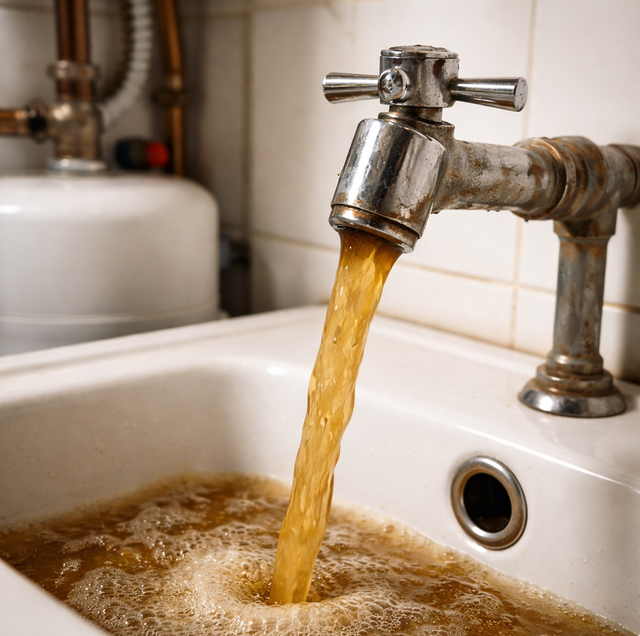
Why Is My Water Discolored or Rusty? 5 Clues to Read
You turn on the tap expecting clear water and get a glass tinted brown, or one that looks milky, or one that leaves a faint blue-green ring in the sink.
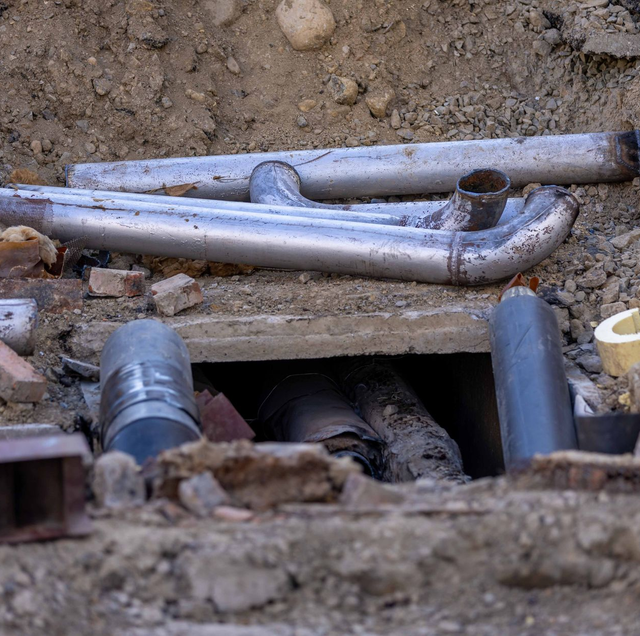
Water Service Line Failing Signs: 6 Warnings Not to Miss
Every faucet, shower, and toilet in the house depends on one pipe you never see.
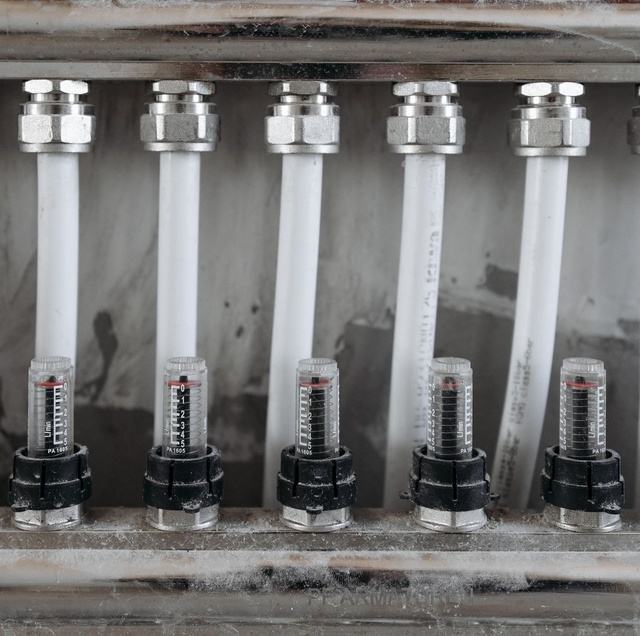
PEX Manifold Plumbing: The Breaker-Panel Setup for Water
Turn on the shower while someone starts the dishwasher, and in many houses the water at one fixture drops to a trickle.
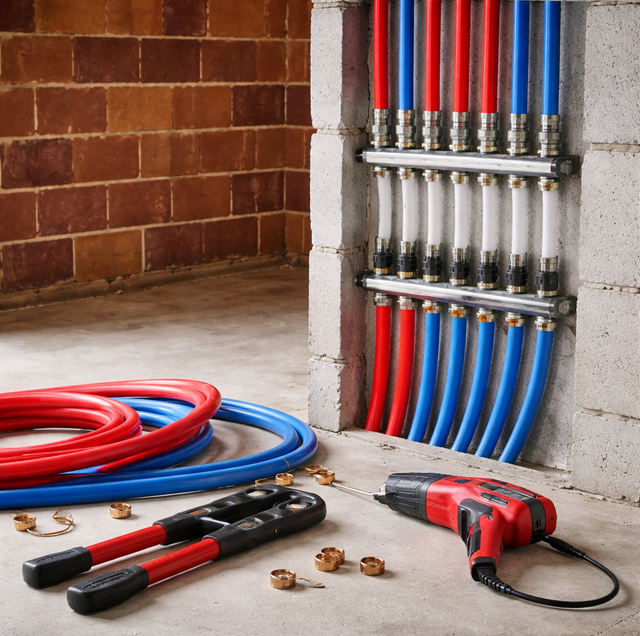
PEX-A vs PEX-B: The Real Difference for Repiping
If you have gotten quotes for a whole-house repipe, you have probably seen the letters PEX-A and PEX-B and wondered whether one is a premium product and the other a corner cut.
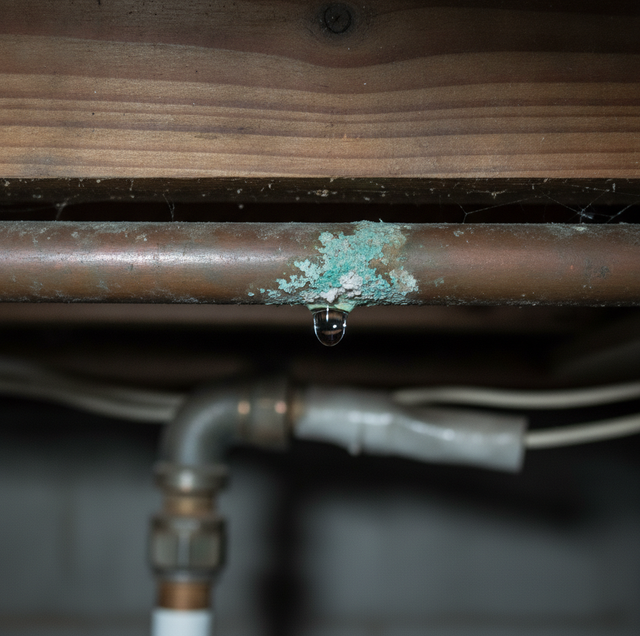
What Causes Pinhole Leaks in Copper Pipe? 6 Real Culprits
Copper has a reputation for lasting decades, so the first pinhole leak tends to catch people off guard. A pipe that looks solid on the outside can be quietly eating through its own wall from the water side, and by the time a drip shows up, the metal is already paper-thin in that spot. Understanding what drives that corrosion tells you whether you are dealing with one unlucky fitting or a plumbing system that is going to keep springing leaks. Here is what actually causes those tiny holes.
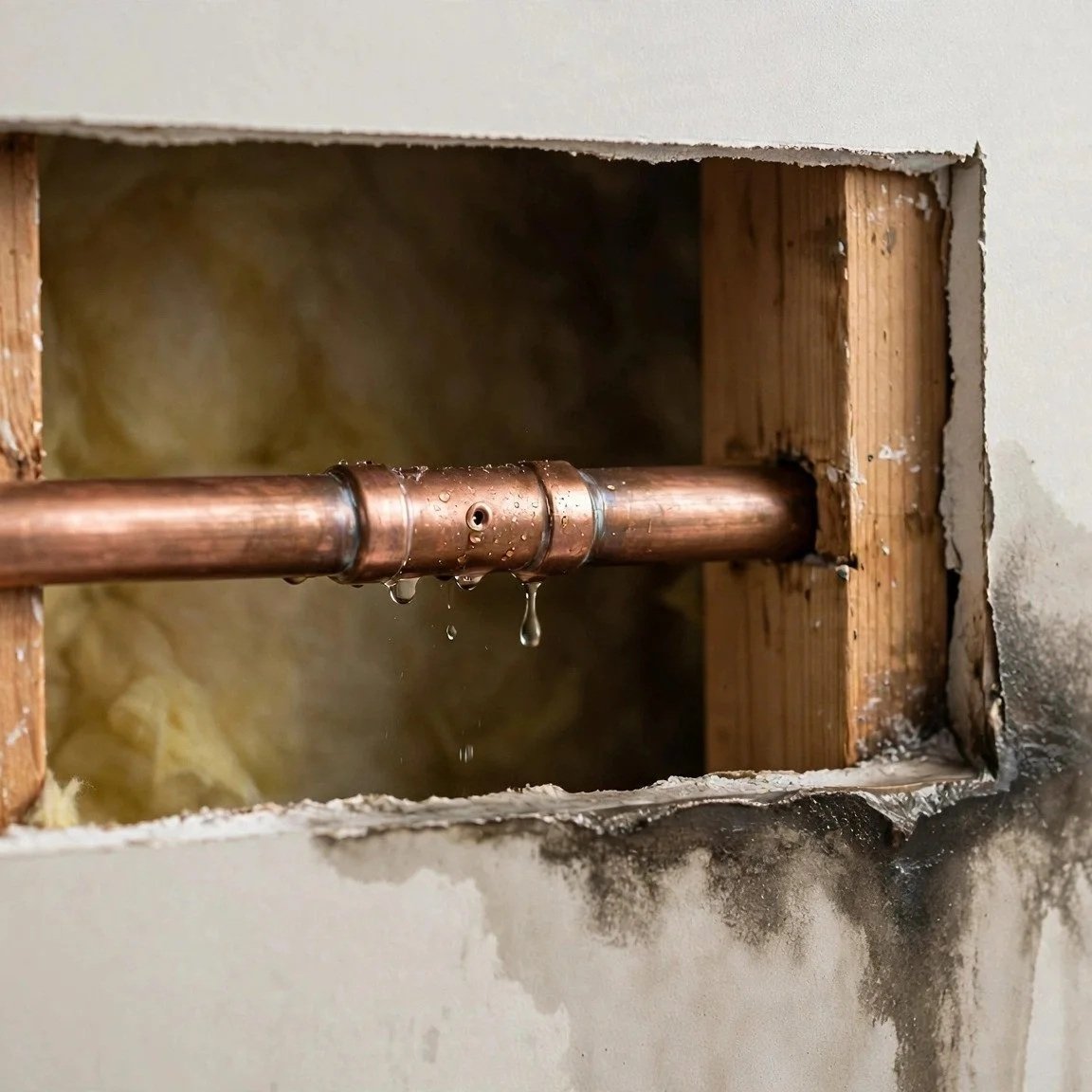
Signs of a Hidden Pipe Leak: 10 Clues Before You See Water
A pipe that fails inside a wall, above a ceiling, under a concrete slab, or below the yard rarely announces itself with a puddle. The water has somewhere else to go first: into framing, into insulation, into soil, into the gaps between building materials. By the time a stain finally shows on a surface you can see, the leak has often been running for weeks. That is why hidden leaks are usually caught by their side effects rather than the water itself.
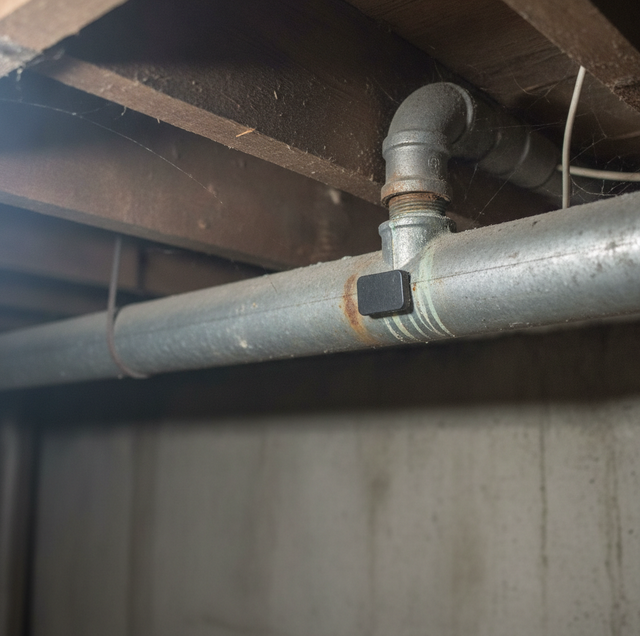
How to Tell If Your Pipes Are Original to the House
When you buy or live in an older home, the plumbing inside the walls is mostly a mystery until something goes wrong. The supply lines carrying pressurized water to every fixture are the ones that matter most, because when they fail, they fail wet, and in an older house, they are often the pipes the builder installed decades ago. The good news is that you do not need to open a wall to get a strong read on what you have. The pipe material itself is a timeline. Each era of construction used a different one, and each has a look, a set of fittings, and a failure pattern you can learn to spot on the runs that are already exposed.
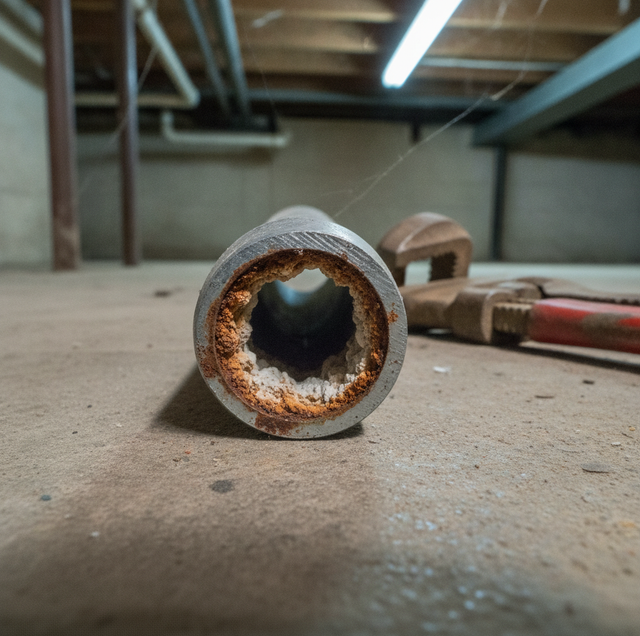
Why Is My Water Pressure Low Throughout the House?
A single dribbling faucet is usually a clogged aerator. But when the shower, the kitchen sink, and the hose bib all run weak at once, the trouble sits somewhere before the water reaches those fixtures. Whole-house low pressure has its own short list of causes, and working through them in the right order saves you from replacing parts that were never the problem.
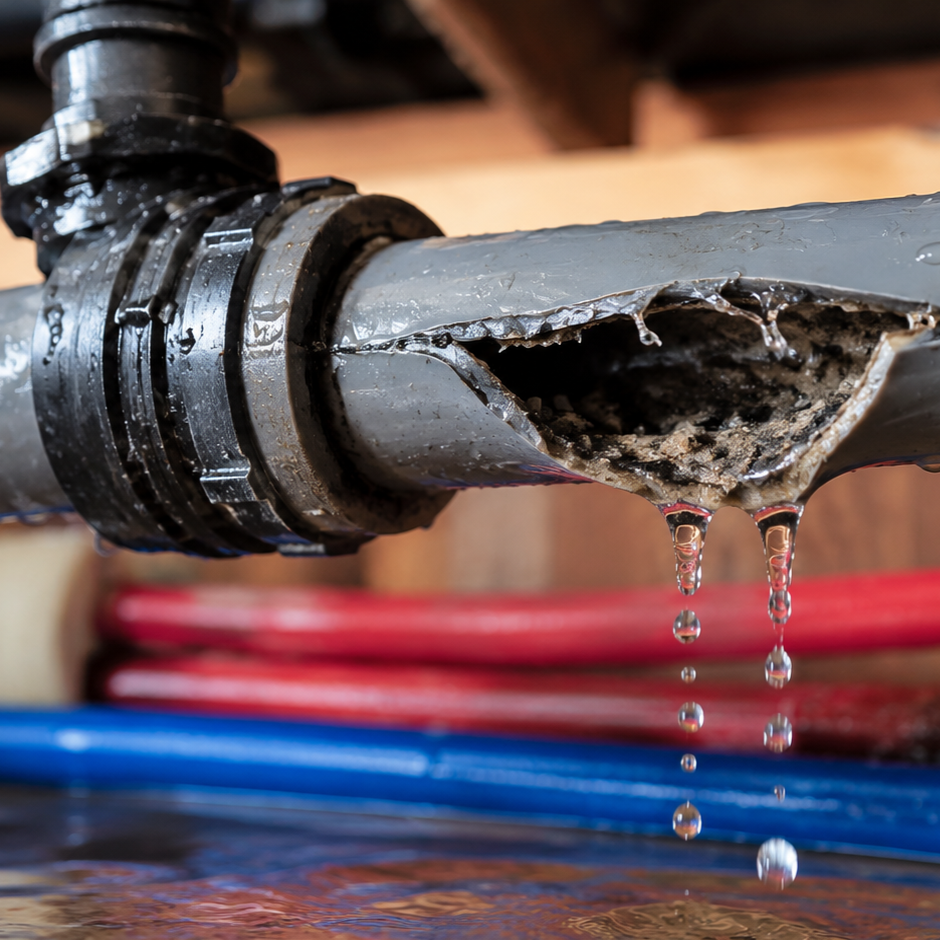
Why Galvanized Pipes Fail (and Ruin Your Water)
Galvanized pipe was the standard in homes for decades, and a lot of older houses still have it. The problem is that it has a built-in expiration: galvanized pipe is designed to work well at first, but breaks down predictably over the years. Understanding why it fails — what's actually happening inside the pipe — explains the discolored water, low pressure, and leaks that show up in homes with aging galvanized plumbing, and why replacing it is so common.
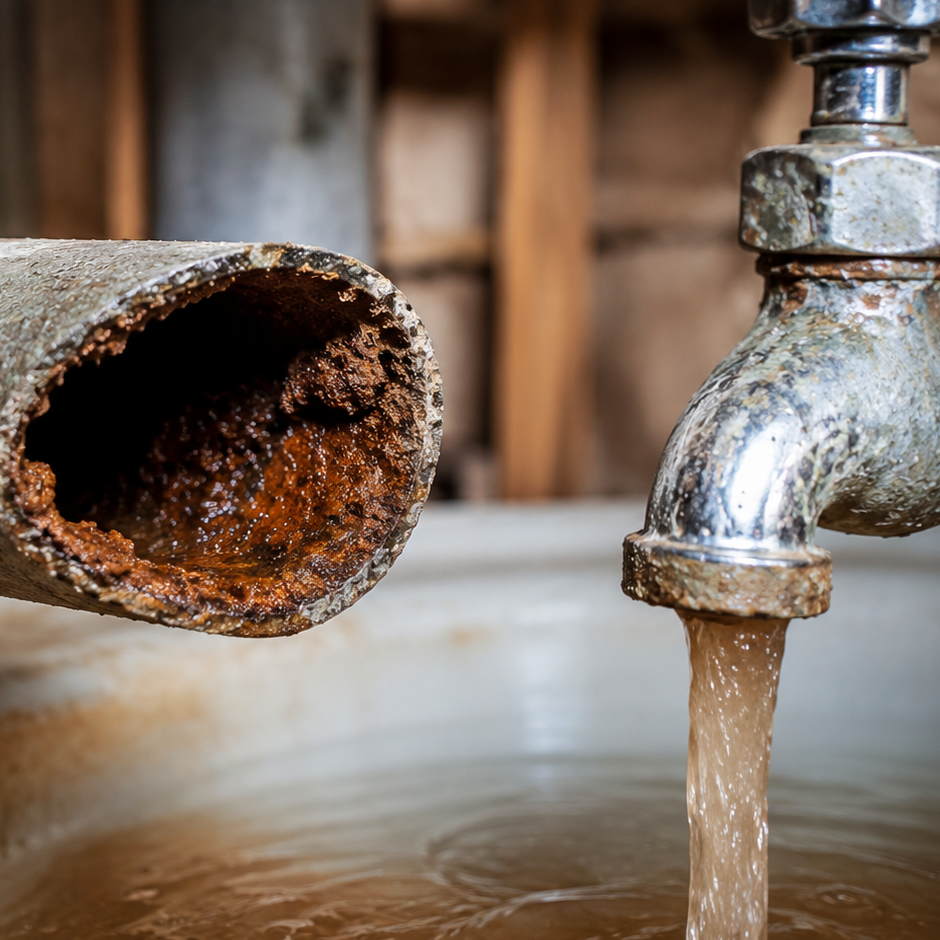
Polybutylene Pipe: What It Is and Why It Fails
If you own an older home, there's a pipe material lurking in some of them that has a troubled reputation: polybutylene. It was installed in a lot of houses for a couple of decades, then fell out of use after it became known for failing. For homeowners, the important things to know are what it is, why it's considered a problem, and how to tell if your home has it — because if it does, it's the kind of thing worth addressing before it causes trouble.
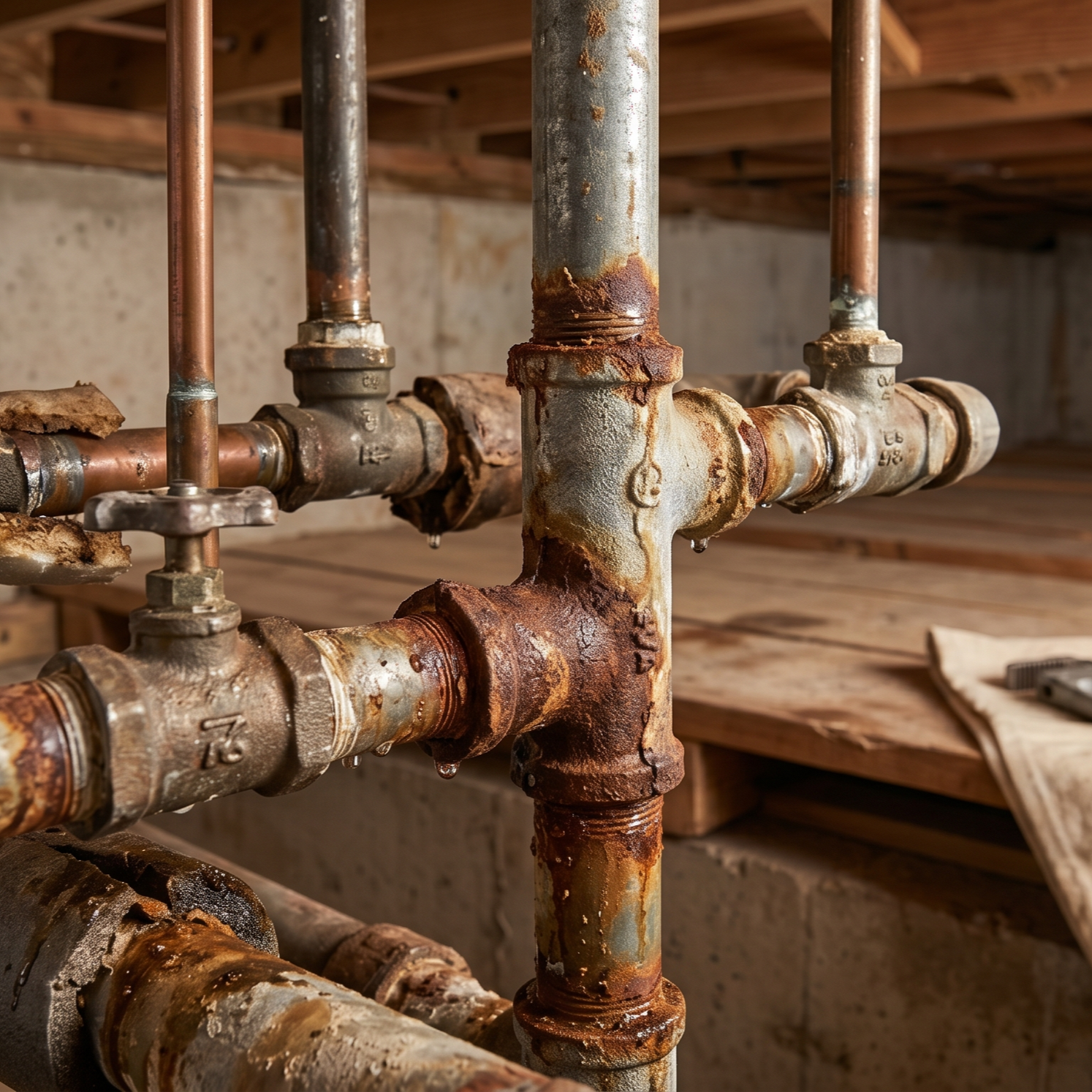
6 Signs Your Home Needs to Be Repiped
Most homeowners never think about their pipes until something goes wrong — and then it goes wrong again, and again. That pattern is the real signal. Pipes don't last forever, and when they reach the end of their life, they send clear signs before they fail for good. Knowing those signs lets you plan a repipe on your terms instead of reacting to a burst pipe and a flooded floor. Here's how to tell when a home has crossed from "fix the leak" to "replace the pipes."
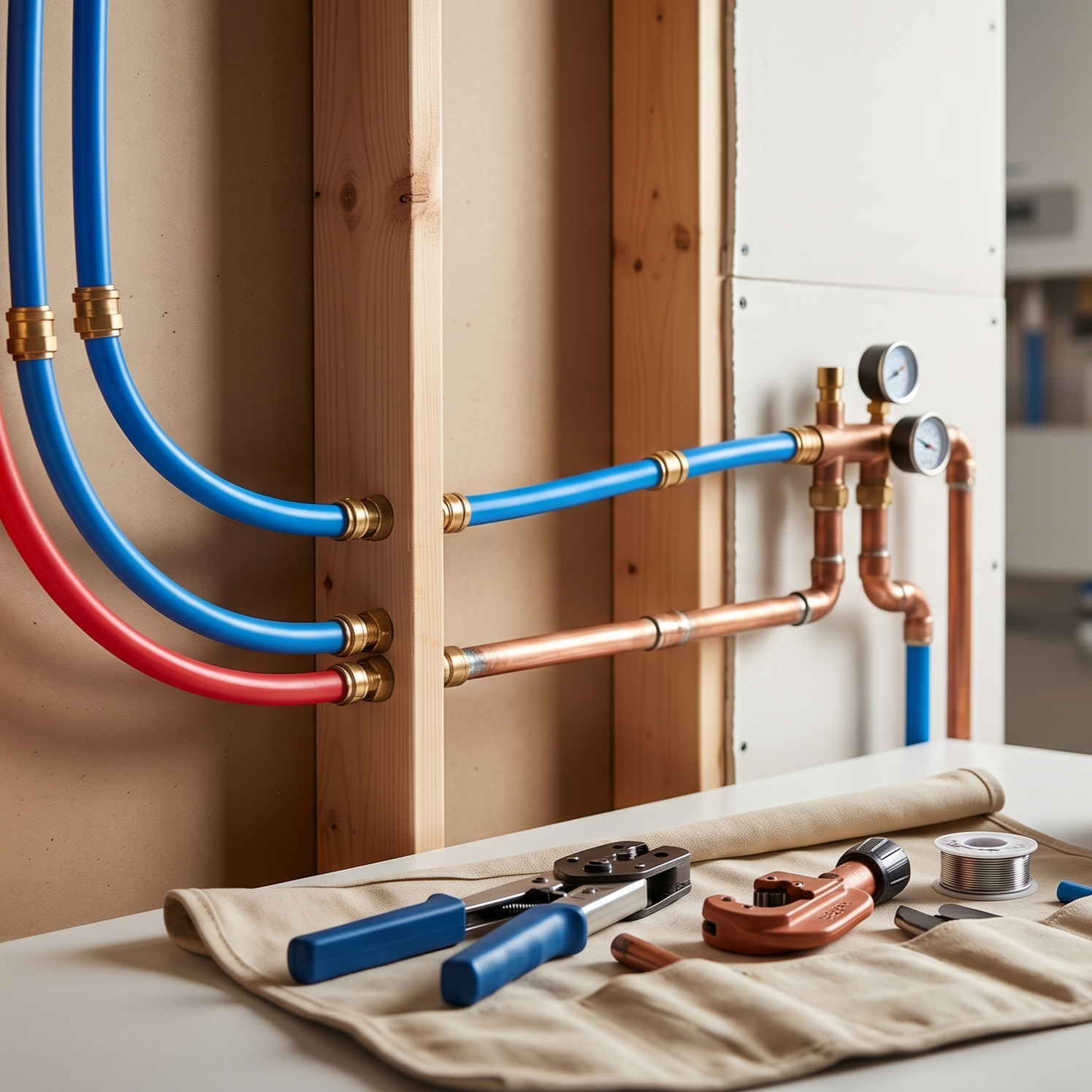
PEX vs Copper Repiping: Which Wins for Your Home?
When you repipe a home, the big decision is the material — and for most modern repipes, it comes down to two choices: PEX or copper. Both are excellent, which is what makes the decision feel hard. They're not better or worse so much as different, each with strengths that matter more or less depending on your home, your budget, and what you value. Here's a clear, side-by-side look to help you choose the right one for your repipe.
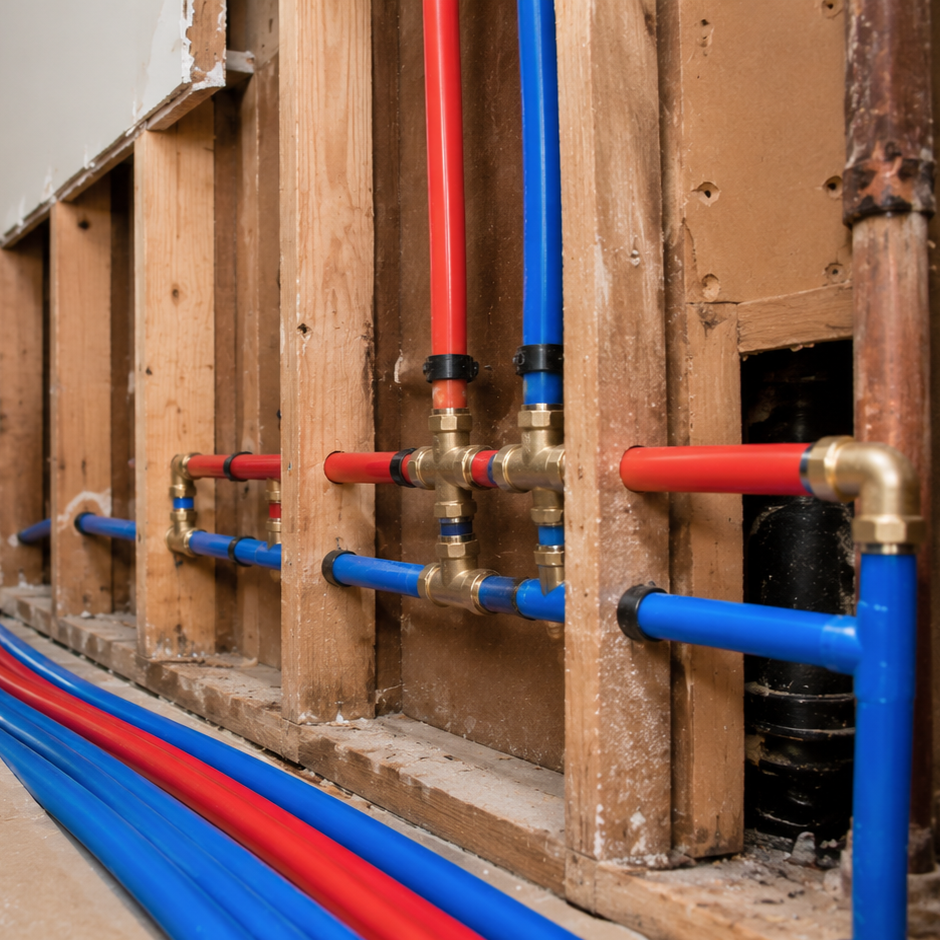
How Long Does a Whole-Home Repipe Really Take?
"Repiping the whole house" sounds like a weeks-long ordeal with the home torn apart — which is exactly why many homeowners put it off. In practice, it's far less daunting: a whole-home repipe is usually a quick project, often done in a day, when handled by an experienced crew, and the home is protected and patched as part of the job rather than left torn open. Knowing how long it actually takes, and what affects the timeline, makes the decision to finally replace failing pipes a lot easier. Here's what to expect.
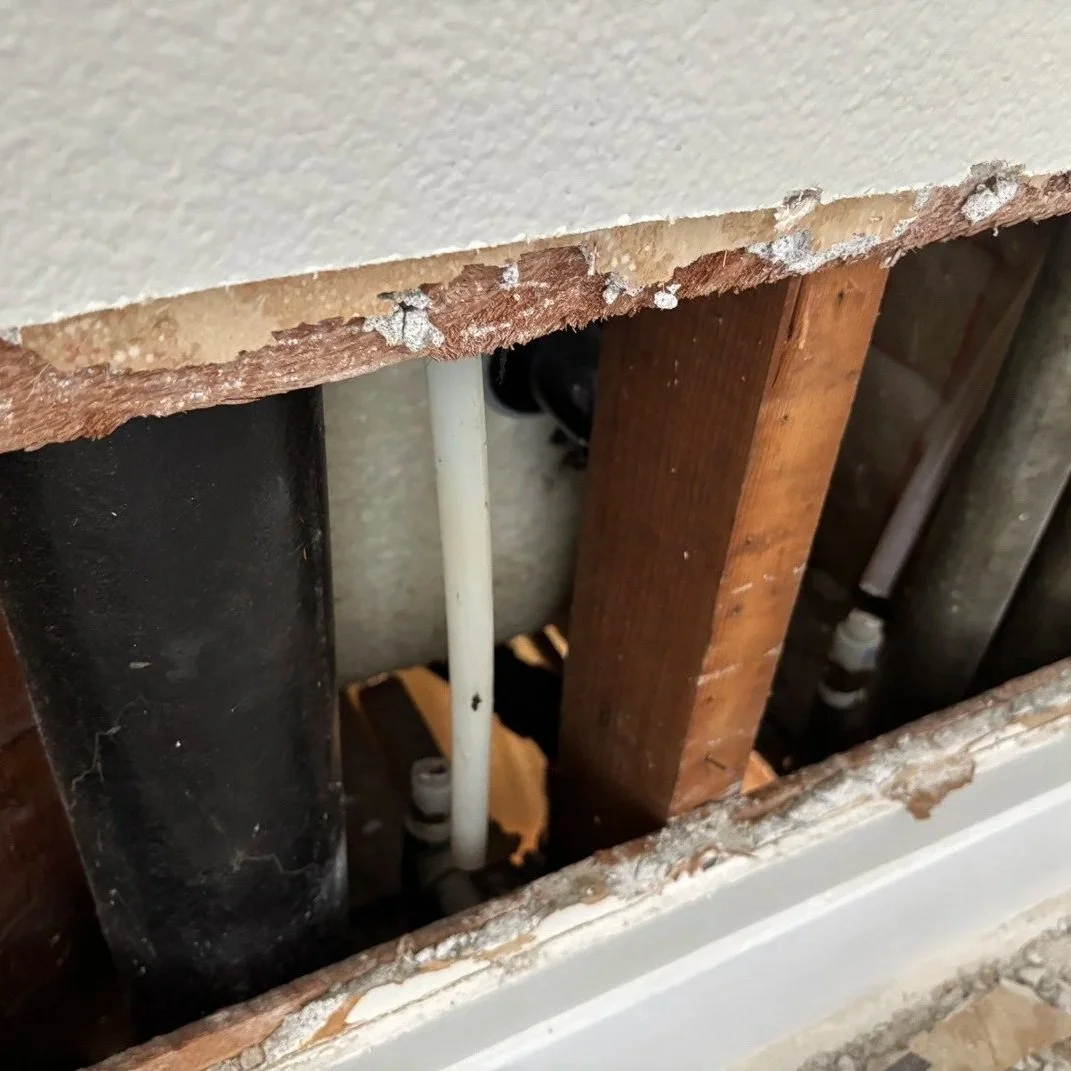
Precision Replacement of Temperature-Specific Water Lines
Hot and cold water line repiping with PEX doesn’t just patch problems; it solves them.
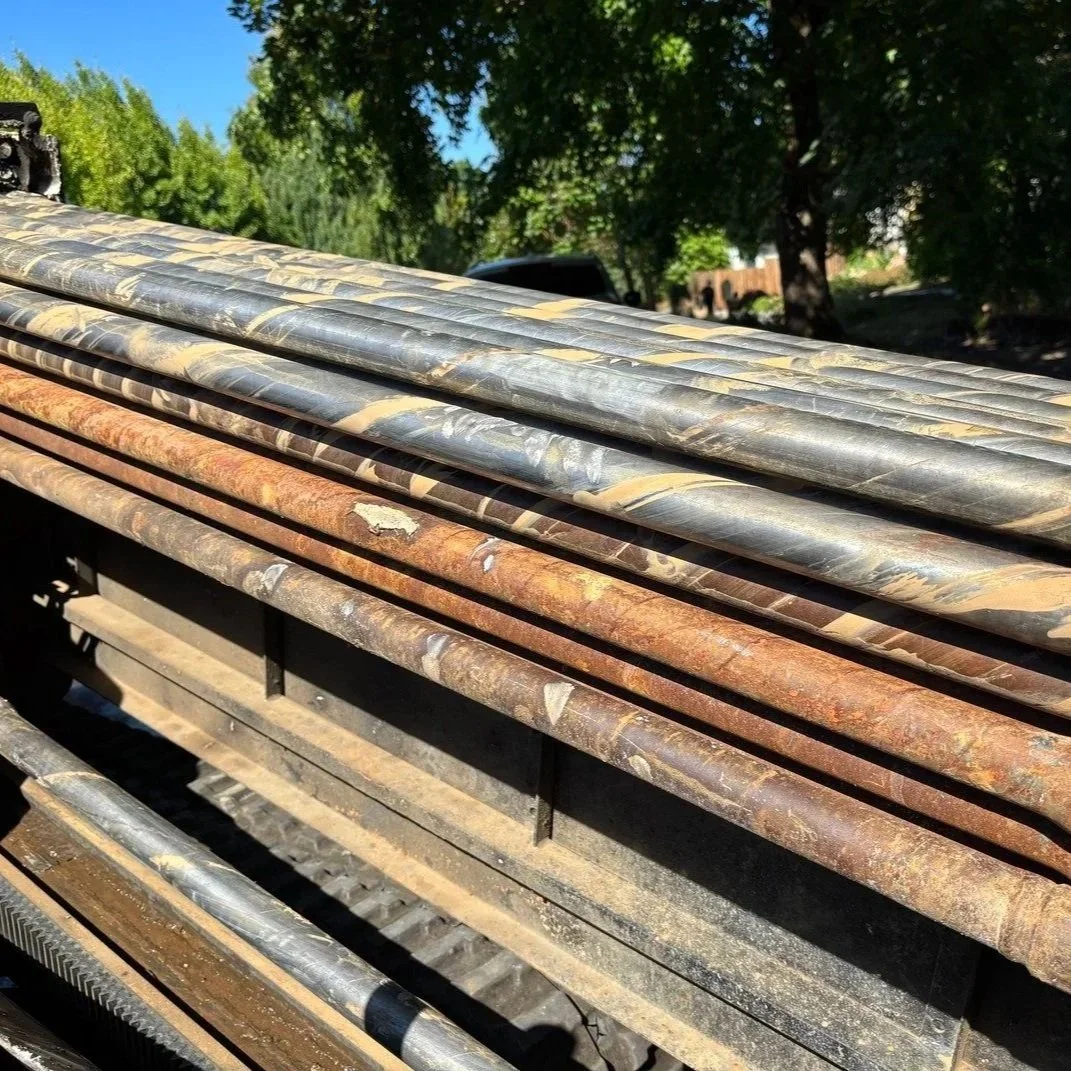
Targeted Repairs for Damaged Copper and Plastic Water Lines
Professionals trained in spot repairs for copper or plastic water lines treat these subtle signs like breadcrumbs.
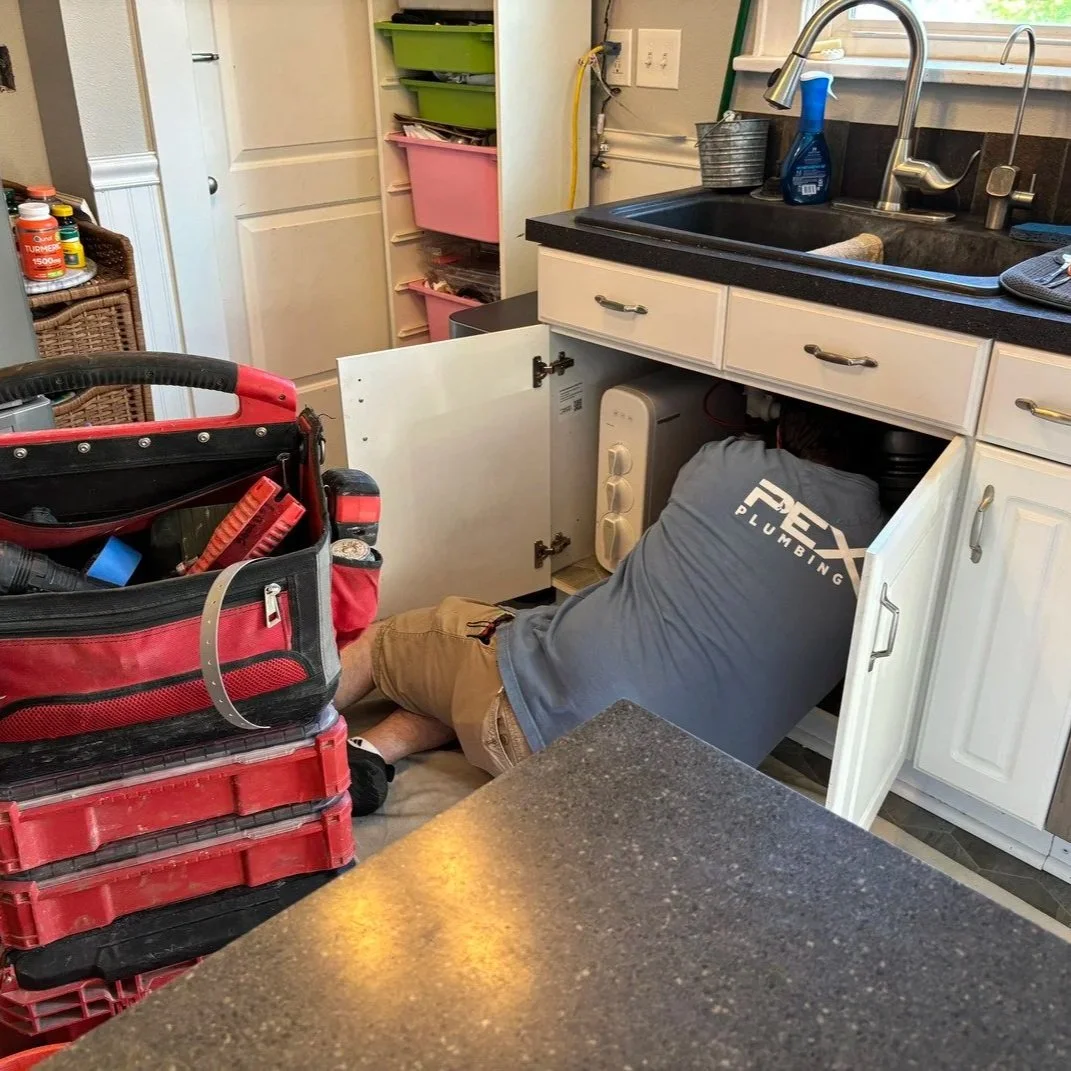
Specialized Services for Identifying Plumbing Leaks Early
Professional leak detection services offer something better than guesswork—clarity.
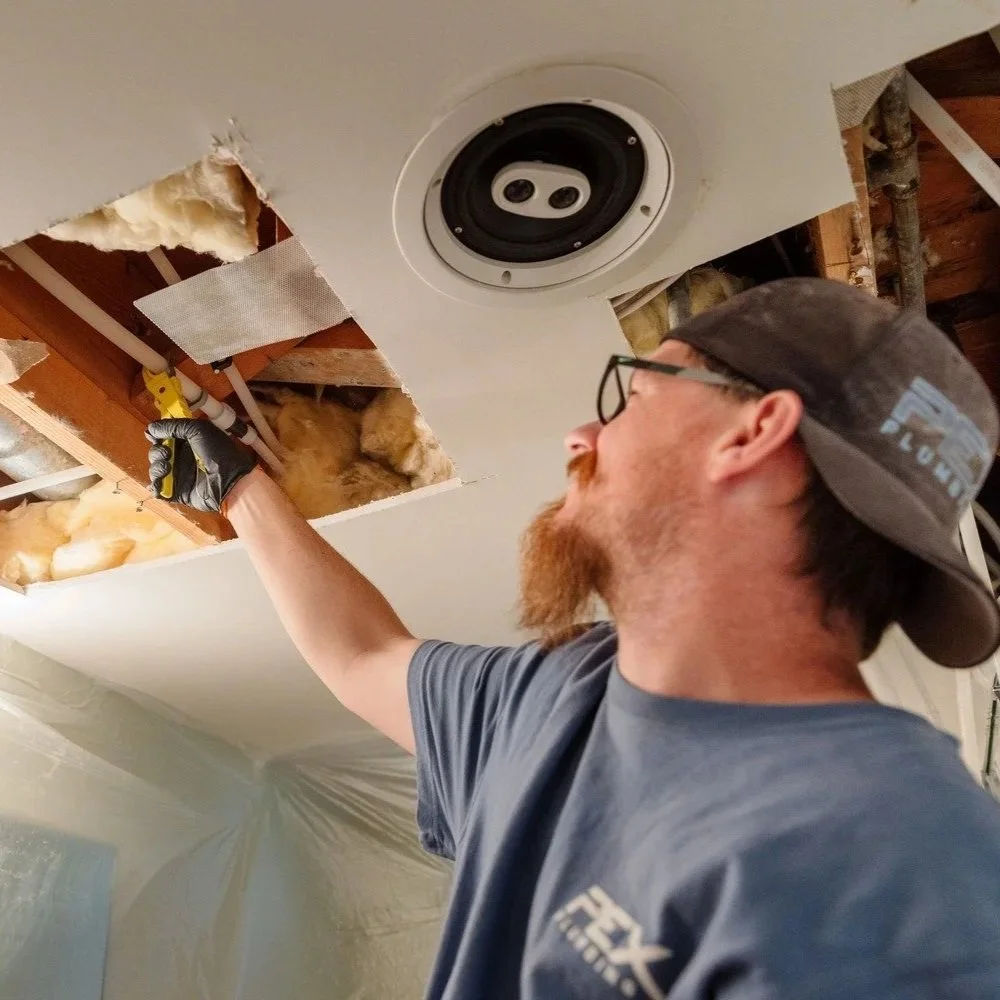
Reconnecting Fixtures with Precision After Complete Repiping
Once all new pipes are in the walls, under the floors, and behind the scenes, the spotlight shifts to the visible components.