
Water Service Line Failing Signs: 6 Warnings Not to Miss
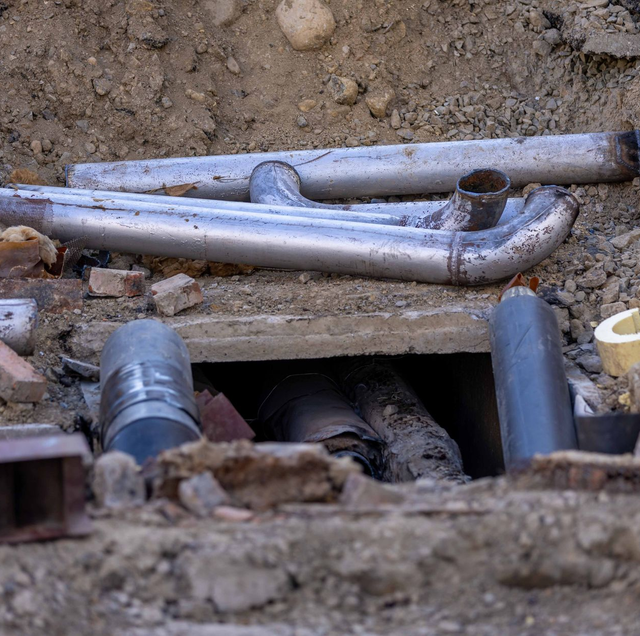
Quick Answer: A failing water service line usually shows itself through a whole-house pressure drop, a rising water bill with no indoor leak, a soggy or unusually green strip of yard along its path, rusty or discolored water from old galvanized or lead pipe, air or sputtering at the taps, and a water meter that keeps turning when every fixture is off. Any one of these is worth investigating; two together point strongly at the buried supply line.
Every faucet, shower, and toilet in the house depends on one pipe you never see. The water service line is the buried run that carries fresh water from the city main at the street, through the meter, and into your home. It is a single point of supply, so when it starts to fail, the trouble shows up everywhere at once rather than at one fixture.
Most people meet their service line only when it breaks, and the yard turns to mud. The better outcome is catching it while the clues are still small: a pressure change, an odd bill, a patch of lawn that stays wet. Those signals give you time to plan a repair instead of reacting to a flooded parking strip.
The Service Line Versus the Pipes Inside Your Walls
It helps to separate two systems that people often blur together. The interior plumbing is everything downstream of where the line enters the house: the branches feeding each bathroom, the water heater, the kitchen. The service line is the single buried pipe upstream of all that, running underground from the utility's main to your meter and then to the house.
That difference matters for diagnosis. An interior leak affects one area, drips somewhere you can see, and often leaves a stain on a ceiling or a warm spot on a slab. A service line problem is invisible because it is buried, and it tends to hit the whole house evenly. If your pressure fell off at every tap on the same day and no single fixture is dripping, the buried line moves to the top of the suspect list.
Why a Buried Supply Line Fails
Service lines fail for reasons that build slowly, which is why the early signs are easy to shrug off.
Age and corrosion of the pipe material: Homes built before the early 1990s were often plumbed with galvanized steel, and some older service lines are lead or an early plastic that has grown brittle. Galvanized steel corrodes from the inside as its protective zinc coating wears away, so the interior diameter narrows with rust and mineral scale until flow chokes down and the wall thins enough to weep or split.
Tree roots and ground pressure: Roots chase the moisture and slight temperature difference around a buried line. They wrap and squeeze fittings, work into hairline gaps, and over years can crush or crack a line outright. Even without roots, the ground itself shifts. Soil that expands and contracts with moisture, settles unevenly, or heaves puts steady bending stress on a rigid pipe until a joint gives.
Poor original material or installation: Some lines were undersized, laid too shallow, or joined with fittings that were never meant to last decades underground. A line installed on the cheap forty years ago is living on borrowed time regardless of what has grown around it.
Because every one of these causes worsens gradually, the pipe rarely announces itself. It leaks a little, then more, and the warning signs stack up before the failure is obvious.
The Warning Signs a Service Line Is Failing
A sudden drop in whole-house pressure: When the showerhead weakens, the kitchen faucet slows, and the washing machine takes longer to fill, all in the same stretch of time, suspect the supply. A corroded galvanized line narrowing from the inside, or a crack bleeding off pressure underground, starves every fixture at once. One slow faucet is usually a clogged aerator; the entire house losing force together points upstream to the buried line.
A water bill that spikes with no leak you can find: A service line leak dumps water into the soil around the clock, and none of it reaches your fixtures, so the meter counts it while you see nothing indoors. If your usage climbed sharply and you have checked toilets, faucets, and the water heater without finding a drip, the loss may be happening underground between the meter and the house.
A wet or unusually green patch in the yard: Water escaping a cracked line has to go somewhere, and it rises toward the surface along the pipe's path. Watch for a strip of lawn that stays soggy in dry weather, grass that is greener and taller in one line across the yard, a spongy spot underfoot, or in cold conditions a stretch that thaws faster than the ground around it. That signature often traces the exact route of the buried pipe.
Rusty or discolored water: Brown, yellow, or reddish water, especially first thing in the morning, is a classic sign of an aging galvanized or old metal service line shedding rust and scale from its interior. Discoloration that clears after a few seconds usually sits in the fixture, but water that runs off-color from the first draw of the day points back toward the corroding supply pipe feeding the house.
Air or sputtering at the taps: When a faucet coughs and spits before it runs steady, air is getting into a system that should be sealed and full. A crack in the service line can draw air in during pressure swings, so sputtering that shows up across several fixtures rather than at one tap is a reason to look at the buried run.
A meter that runs with everything off: The most direct clue lives at the meter itself, which leads to the single best test you can do yourself.
The Meter Test That Confirms a Supply-Side Leak
Think of the meter as an odometer for your water: if the car is parked and the numbers keep climbing, something is moving that shouldn't be.
To test for a supply-side leak, shut off every water-using fixture and appliance, note the meter reading, then wait fifteen to thirty minutes without using water and read it again. If the meter advanced with everything closed, water is escaping somewhere on your side of the meter.
To sort a buried line leak from an indoor one, locate the main shutoff where the line enters the house and close it, then repeat the reading. If the meter stops moving once the house is isolated, the loss is inside. If it keeps turning with the house valve shut, the leak sits in the buried service line between the meter and that valve. That single comparison is what tells a plumber whether to dig outside or work indoors.
Who Owns the Line, and Why That Matters
In most places, the homeowner owns and is responsible for the water service line from the meter or the curb stop up to the house, while the utility owns the main and the meter itself. That means a leak on your side of the meter is usually yours to repair, not the city's.
Ownership and the exact dividing point vary by locality, so confirm with your water utility before assuming who pays for what. Some jurisdictions draw the line at the curb, others at the meter, and a few offer service-line protection programs. Knowing where your responsibility begins tells you who to call and what to expect before a shovel touches the ground.
How a Failing Line Gets Replaced
Once a supply-side leak is confirmed, the buried line is located and either repaired or, more often for an old or corroded pipe, replaced end to end. There are two broad approaches, and a plumber chooses based on the pipe's condition, the soil, and what sits above the route.
Open trench: The classic method digs a trench along the pipe's path, exposes the old line, and lays a new one, typically in modern polyethylene or copper. It is direct and lets the crew inspect the full run, but it disturbs whatever is on top: lawn, driveway, walkway, or garden.
Trenchless replacement: Where conditions allow, trenchless methods replace the line with minimal digging. Pipe bursting pulls a new pipe through the old one while a bursting head fractures the failed pipe outward into the soil. Pipe pulling draws a new line through the existing path. Both need only small access pits at each end rather than a trench across the whole yard, which spares hardscape and mature landscaping.
A buried service line often shares the ground with gas, power, and communications lines. Never dig to locate or repair it yourself. Call 811 first so the underground utilities are marked, and leave the excavation to a professional.
Why Acting Early Pays Off
A small underground leak does not stay small. Escaping water erodes the soil bedding the pipe, and as that support washes away, the line sags and stresses further, widening the crack and speeding failure. The same running leak keeps inflating the water bill every single day until it is fixed, and a saturated area near the foundation is not something you want to leave sitting.
Catching the signs early turns an emergency dig into a scheduled repair. You get to choose the method, plan around your yard, and stop paying for water that never reaches a faucet. A line that is failing on discolored water or falling pressure today is telling you it is near the end of its service life, and a metal or lead line especially is worth testing and planning to replace rather than nursing along.
Frequently Asked Questions
Service life depends on material. Copper lines commonly last 50 years or more, and modern polyethylene is rated for a similar or longer span. Galvanized steel, by contrast, often begins failing at 40 to 50 years and can go sooner in aggressive soil, which is why homes from the mid-20th century are the ones most likely to be living past their line's design life.
It can. When pressure drops during a leak or a nearby main break, the low pressure can let groundwater and soil be drawn back into a cracked line, a backflow risk that a healthy pressurized line prevents. This is one reason a suspected service-line leak is not something to leave running for weeks while you decide what to do.
A lead line can release lead into the water, and it is a reason to test and plan replacement rather than wait for a leak. You can often identify it yourself: find where the line enters near the meter, scratch the pipe gently with a coin, and if the scratch is shiny silver-gray and a magnet will not stick, it may be lead. Confirm with a water test and have a professional verify before acting.
Standard homeowner's policies generally exclude the buried service line, treating gradual wear and corrosion as maintenance rather than a covered sudden event. Some insurers and many water utilities sell a separate service-line coverage add-on for a small monthly fee that helps with the excavation and pipe. Check your specific policy and any utility program before a failure, not after.
Temperature swings work both ways on a buried line. In cold spells, the ground contracts and heaving soil can stress or shear an already brittle pipe, while in warm, dry stretches, soil shrinks and settles unevenly, bending the line the other direction. Because both extremes add movement, a marginal line tends to give up during a sharp weather change in either season rather than in mild conditions.
Depth is set so the pipe sits below the local frost line, which is why it varies by region, but residential service lines commonly run somewhere around 12 inches to several feet down. That depth is exactly why locating and repairing one is a digging job that requires 811 marking first, since the trench crosses ground that other buried utilities share.
Book a service-line inspection before a small leak floods your yard — confirm the problem and get a plan. PEX Plumbing & Repiping serves Portland, Beaverton, Tigard. Call (971) 232-3079.
