
Why Is My Water Discolored or Rusty? 5 Clues to Read
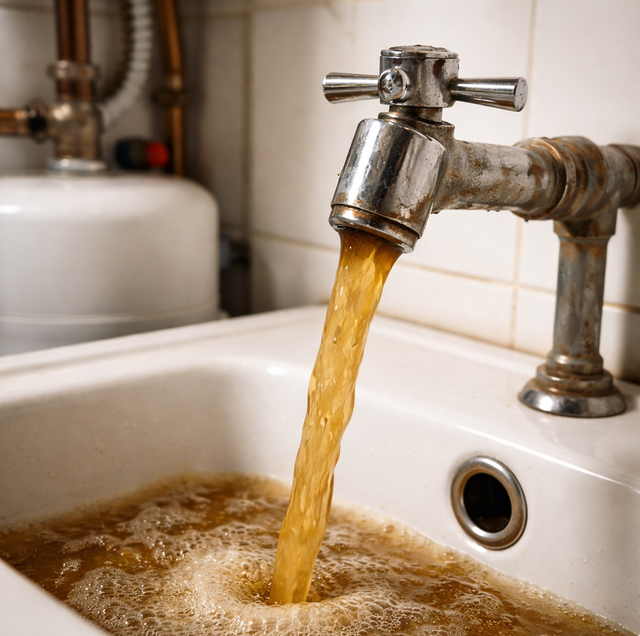
Quick Answer: Rusty or brown water most often comes from iron and rust shed by aging galvanized steel pipe, old cast iron, or a corroding water heater. If it clears after running the cold tap for a minute, it was likely a temporary stir-up. If it keeps coming back, or only the hot side is affected, corrosion inside your own plumbing is the more likely cause and worth testing.
You turn on the tap expecting clear water and get a glass tinted brown, or one that looks milky, or one that leaves a faint blue-green ring in the sink. Discolored water is unsettling, and it usually means one of two very different things: a passing disturbance that clears on its own, or corrosion happening inside your pipes right now. Reading the color and running a few quick tests tells you which one you are dealing with before you call anyone.
What Each Color Is Actually Telling You
Water picks up its tint from whatever it contacts on the way to your faucet. The shade is a rough fingerprint of the source.
Brown, Yellow, or Red: Iron and Rust: This is the classic discolored-water complaint. Yellow-to-red-brown water almost always means iron, and iron in your tap water usually traces back to metal corroding somewhere upstream of the faucet. Galvanized steel pipe, common in homes built before the early 1960s, has a zinc coating that wears away over decades, leaving bare steel to rust from the inside out. Old cast-iron supply lines do the same. As the interior of the pipe scales and flakes, rust particles ride along with the flow and show up in your glass. A water heater tank that has lost its protective lining rusts internally too, which is why rusty water is sometimes strictly a hot-water problem.
Cloudy or Milky White: Trapped Air: Milky water that looks like a cloud settling in the glass is rarely a contamination problem. Fill a glass and watch it: if it clears from the bottom up within a minute or two, you are looking at dissolved air. Pressure changes in the line, a recently serviced main, or cold water warming as it sits can all release tiny bubbles. It is a cosmetic issue, not a corrosion signal.
Blue-Green Tint or Blue-Green Staining: Copper Corrosion: A faint blue or blue-green cast to the water, or a blue-green stain that builds up around drains and fixtures, points to copper being dissolved from copper supply lines. Water that sits a long time in copper pipe, or water chemistry that is more corrosive to copper, can pull trace copper into solution. The staining is the more common tell; the tint takes heavier corrosion to see.
Black or Dark Specks: Manganese, or Something Growing: Black-tinged water or dark flecks often come from manganese, a mineral that behaves a little like iron and darkens as it oxidizes. Black slime, as opposed to hard specks, is a different story: that is usually mold or bacterial growth in a fixture, an aerator, or a rubber supply-hose gasket, not a problem with the water in the pipe itself.
The Diagnostic Splits That Narrow It Down
Color hints at the material. Where and when the discoloration appears tells you whether the problem is a passing event or your own failing plumbing. Run these four checks in order before you assume the worst.
Hot Only, or Cold Too? Fill a glass from the cold tap, then one from the hot. If only the hot water is rusty, the water heater is the prime suspect: a corroding tank or a spent sacrificial anode rod sheds iron into the hot side alone. If both hot and cold run discolored, the source is upstream of the heater, in the supply piping or the incoming line.
One Fixture, or the Whole House? Check several taps around the house. Discoloration at a single faucet points to something local: a corroded supply line to that fixture, a failing gasket, or debris caught in that aerator. When every tap runs rusty, the problem lives in the main supply lines or the water coming into the house, not in one fixture.
Does It Clear After Running, or Persist? Let the cold tap run for one to two minutes. Water that starts brown and runs clear was carrying settled sediment that got stirred up and then flushed through. A corroding pipe is actively shedding water that stays discolored no matter how long it runs as the water passes, which is the more serious pattern.
First-Draw Only, or All Day? Notice the timing. If the first draw each morning is discolored and it clears once water moves, particles have been settling overnight inside your pipes, a sign the interior surfaces are corroding and loading the water with sediment while it sits. If discoloration comes and goes with no relation to standing time, look outward to the utility.
When It Is the Utility, Not Your House
Sometimes the discoloration has nothing to do with your plumbing at all. Cities and water districts periodically flush their mains and open fire hydrants to clear sediment from the distribution system. That flushing stirs up iron and mineral deposits that have settled in the public pipes, and the cloudy or rusty water rides into homes on the block for a few hours. A water-main break or nearby construction can do the same.
The tell is that it affects the whole neighborhood, arrives suddenly, and clears within a day. Neighbors seeing the same thing, or a posted flushing notice, confirms it. Think of a river running clear until a boat's wake lifts silt off the bottom; the water was fine, the bottom just got disturbed, and it settles again once the wake passes. If your discoloration lines up with a utility event, running the cold taps for a few minutes to draw fresh water through usually clears it.
What to Do Right Now During a Brown-Water Event
If you turn on the tap to sudden brown water, a few steps limit the mess and help you diagnose.
During a brown-water event, run the cold taps rather than the hot for several minutes to pull clear water through and avoid drawing sediment into the water heater. Hold off on laundry and the dishwasher until the water runs clear, since iron and rust can stain fabric and are hard to wash back out.
Skip running the dishwasher during the event for the same reason. If it clears within the hour and does not return, it was almost certainly a passing disturbance.
Rusty or discolored water can stain fixtures and laundry, and persistent discoloration can point to pipe corrosion, but color alone is not a reliable read on whether water is safe to drink. Diagnosing health effects is not something to eyeball at the tap. If you are unsure, the right move is certified water testing through an accredited lab, which identifies exactly what is in the water and at what level.
When Discoloration Means Failing Pipes
Here is the line that matters most. A single brief episode that clears and does not return is usually a passing event: utility flushing, a pressure change, a one-time stir-up. Discoloration becomes a plumbing problem when the pattern repeats.
Recurring rusty water, especially first-draw brown water that returns morning after morning, is corroding the supply pipe, loading sediment into the standing water overnight. Galvanized steel that has rusted through on the inside does not reverse; it narrows, weakens, and eventually leaks. Once a home's original galvanized or old cast-iron piping starts shedding rust consistently, patching one section rarely solves it, because the same aged material runs throughout the house. That is the point where whole-house repiping, replacing the corroded runs with modern piping, addresses the source rather than chasing symptoms. Hot-only rust that traces to a corroding water heater is its own repair: tank flushing, anode rod service, or heater replacement, all pro work rather than a homeowner fix.
If the tests above point to your own plumbing, or you simply cannot tell whether it is a passing event or a failing line, having the water tested and the piping inspected settles it.
Frequently Asked Questions
Yes. Iron and rust particles are abrasive and staining. Over time, they can leave orange-brown marks on porcelain fixtures, discolor light-colored laundry, and settle inside a dishwasher or washing machine. Rust can also collect in faucet aerators and shut-off valves, reducing flow at individual fixtures. Wiping stains promptly and avoiding hot-water washes of white fabrics during an episode limits the damage.
When water sits motionless in the pipes for days, any iron or sediment shed from the pipe walls settles and concentrates in the standing water instead of being flushed out by daily use. The first draws after a long absence pull that accumulated sediment through, so the water looks worse than during normal use. Running every cold tap for a few minutes before drinking or cooking clears the stagnant water.
It depends on the cause. A sediment or iron-reduction filter can catch particulate rust and manganese before they reach your faucets, which helps when the source is upstream or intermittent. But a filter does nothing about pipe that is actively corroding downstream of it, and it will not stop galvanized pipe from continuing to fail. A filter treats the symptom at the point it is installed; it is not a substitute for replacing corroded piping.
No. A magnet will not tell you iron content, and jar or strip tests sold for home use give only rough hints. Accurate identification of iron, manganese, copper, and bacterial contamination requires a sample analyzed by an accredited laboratory, which measures each at a specific concentration. If you plan to make a decision based on the results, use certified lab testing rather than a home kit.
Yes, though it is often overlooked. A malfunctioning water softener can send resin beads or brine into the lines, and iron that has fouled the softener's resin bed can bleed back into the treated water, adding a rusty tinge. If discoloration started after softener service or a salt refill, isolate the softener by bypassing it for a day and see whether the water clears.
There is no fixed clock, but the sequence is predictable: interior rust thickens and narrows the pipe over years, flow drops and discoloration worsens, then a weak spot finally weeps or bursts. Homes with original pre-1960s galvanized supply lines are the most exposed, and cold snaps stress already-thinned walls while everyday pressure cycling wears them the rest of the year. Consistent rusty water from old galvanized pipe is a late-stage warning, not an early one.
Book a water-quality check and pipe inspection — get a clear answer on whether it is a passing event or failing pipes. PEX Plumbing & Repiping serves Portland, Beaverton, Tigard. Call (971) 232-3079.
