
What a Water Pressure Test Reveals About Your Plumbing
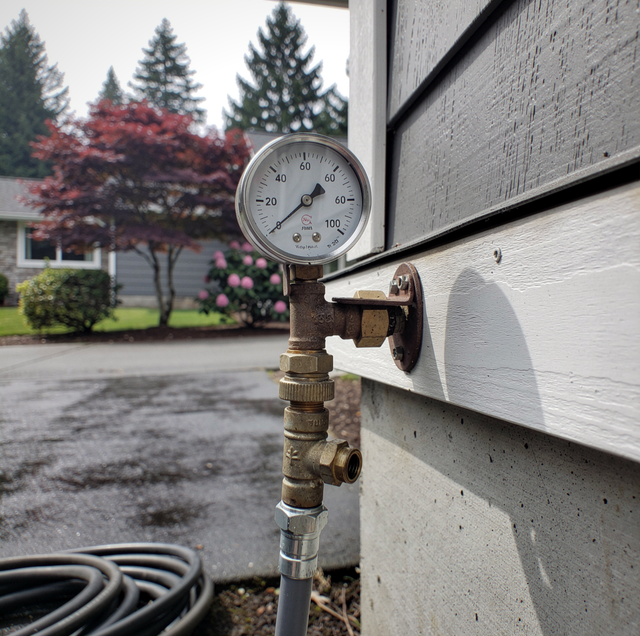
A pressure test is one of the simplest diagnostic tools in plumbing, and also one of the most informative. A single reading, taken with a gauge that costs less than a dinner out, tells a plumber whether the system is running within a safe range, whether a component is failing, or whether the pipes themselves have narrowed enough to hold the whole house back. It's the plumbing equivalent of a blood pressure cuff: quick to apply, hard to argue with, and often the first step before anyone talks about a bigger fix.
Homeowners tend to hear the word "pressure" and think about a weak shower or a slow-filling washing machine. A pressure test measures something more specific than that. It captures the static force pushing water through the system at a given moment, and that single number, read correctly, can separate a five-minute valve adjustment from a problem that runs through every wall in the house.
Why A Pressure Test Gets Done
A pressure test is a baseline health check for a home's plumbing, not a diagnosis of any one fixture. Because the reading reflects the entire supply system rather than a single tap, it's one of the few checks that can rule out or confirm several possible causes at once.
Plumbers reach for a pressure test in a handful of common situations. A homeowner reports weak flow throughout the house, not at a single sink. A fixture or appliance is failing early, and there's a question of whether it was ever getting the right amount of force to begin with. A remodel or repipe project needs a clear starting point before new pipe goes in. Or nothing has gone wrong yet, and the test is simply part of routine due diligence on an older home, the plumbing version of checking tire pressure before a long drive rather than waiting for a flat.
The value of the test is that it turns a subjective complaint, "the shower feels weak," into an objective number that can be compared against a known healthy range. That comparison is what turns a hunch into a diagnosis.
How The Test Is Actually Performed
The process itself is quick and doesn't require opening any walls or shutting the house down for hours.
A plumber attaches a screw-on pressure gauge to an outdoor spigot or a hose bib, the same threaded connection you'd use for a garden hose. That location matters because it sits close to where the main supply line enters the home, ahead of most of the branch piping that feeds individual fixtures, giving a reading that reflects the system as a whole rather than one isolated run of pipe.
Before the gauge goes on, every fixture and appliance inside gets shut off: faucets, the washing machine, the dishwasher, any irrigation running on its own line. This first reading is the static pressure, the force in the system when no water is moving anywhere. It's the number most people mean when they ask about their water pressure.
A second reading is often taken with water actively running, usually from a couple of fixtures at once. This is the flowing pressure, and it can behave very differently from the static number. A system can show a perfectly normal static reading and still drop sharply the moment water starts moving, which is a distinction that matters a great deal for what comes next.
Some assessments also include a few minutes of simply watching the gauge needle. A steady reading suggests a stable, healthy system. A needle that drifts, spikes, or won't settle can indicate a failing regulator or a hidden leak, both of which show up in pressure behavior rather than a single static number.
Reading The Numbers: What Normal Looks Like
Most residential plumbing is designed to run comfortably in a static range of roughly 45 to 80 psi. Within that band, fixtures fill at a normal rate, water heaters and appliances operate as they were built to, and there's enough pressure in the line to serve two or three fixtures at once without a noticeable drop.
A reading inside that range with fixtures off, paired with a flowing reading that doesn't collapse when water starts moving, is the sign of a system in good working order. That's the outcome everyone hopes for, and it means whatever prompted the test in the first place has another explanation, most likely something local to a single fixture rather than the supply system feeding the whole house.
What A High Reading Indicates
Pressure above roughly 80 psi doesn't usually announce itself the way low pressure does. There's no obvious symptom at the tap; water still comes out fast, sometimes faster than expected, which is part of why chronically high pressure often goes unnoticed for years.
The risk with pressure that runs consistently high isn't immediate; it's cumulative. Supply lines, fittings, and the seals inside faucets and appliances are all designed for an expected operating range, and pressure consistently above that range shortens their service life. Water heaters take on extra strain at their pressure-relief valve. Washing machine hoses and dishwasher connections wear faster. Joints that would otherwise last for decades start to weep sooner than they should. A pressure test that shows a high reading is often the first clue to a pattern of premature fixture failures that otherwise looked unrelated.
A consistently high reading usually indicates a pressure-reducing valve that has failed open, or that was never installed in a system that needs it, rather than a defect in the pipes themselves. That's a meaningfully different fix from anything involving the supply lines.
What A Low Reading Indicates
A reading below roughly 45 psi, especially one that drops further once water starts flowing, points in a different direction, and this is where a pressure test earns its keep as a diagnostic tool rather than a simple pass or fail check.
The first thing a low reading rules in or out is the municipal supply itself. Pressure delivered to the meter varies by neighborhood and can sag during peak demand, so a plumber comparing a low reading against known supply pressure in the area can quickly tell whether the house is getting shortchanged before the water even reaches the property line.
If the supply checks out, attention shifts to the pressure-reducing valve. A PRV that has failed can drop pressure just as easily as it can let too much through, and testing before and after the valve helps confirm whether that single component is the bottleneck. A failed regulator is a defined, replaceable part, and once it's swapped, pressure typically returns to normal immediately.
When the supply is fine and the regulator tests normal, the remaining explanation sits inside the pipes themselves. Older, corroded, or undersized supply lines physically restrict how much water can move through them, regardless of how much pressure is pushing from the street side. This is where the flowing-pressure reading becomes especially useful: a system can show acceptable static pressure with fixtures off, then drop noticeably once water starts moving, because the narrowed interior of an aging pipe can't keep up with any real demand. That specific pattern, normal static pressure paired with a flowing pressure that falls off fast, is one of the clearer signs that the restriction is physical and built into the pipe wall rather than anything a valve adjustment will fix.
How Pressure Testing Connects To A Repiping Decision
A pressure test on its own doesn't answer whether a home needs new pipes. What it does is narrow the field of possible causes to a short, specific list, and that list determines whether the next step is a simple part swap or a larger conversation about the supply lines themselves.
The sequence generally runs in order of cost and disruption. Rule out the municipal supply first, since that's outside anyone's control on the house side. Test and, if needed, replace the pressure regulator, since that's a contained, specific repair. If both of those check out and the pressure still comes back low, particularly with that gap between static and flowing readings, the remaining explanation is the condition or diameter of the existing pipe.
That's a meaningfully different outcome than a bad valve, because pipe material doesn't get fixed with a single part replacement. Corrosion and interior scale buildup are permanent once they've narrowed a pipe's usable diameter; there's no cleaning or flushing that restores the original bore. In a home with old or poorly maintained piping that is causing that restriction, a full repipe is the only way to resolve the pressure problem at its source, rather than treating symptoms one fixture at a time.
What To Expect From A Professional Pressure Assessment
A thorough pressure assessment goes beyond a single gauge reading at one spigot. A plumber walking through this process typically checks pressure at more than one point, compares static and flowing readings, and assesses how the regulator (if present) performs under both conditions. When the results suggest the pipe itself might be the limiting factor, a visual inspection of any exposed sections in a crawlspace, basement, or utility closet often follows to check for corrosion, scale buildup, or material type that would explain a restricted flow rate.
The result of that combined process is a clear answer rather than a guess: either the system is operating within a healthy range, and something else explains the original complaint, or the numbers point at a specific, identifiable cause, a valve, a supply issue, or the pipes themselves, each with its own distinct next step. That clarity is the entire point of running the test in the first place, and it's usually far faster to get a straight answer this way than to replace parts one at a time and see what changes.
Frequently Asked Questions
A basic static and flowing pressure check at one spigot usually takes only a few minutes. A more complete assessment that includes multiple test points, a check of the pressure regulator, and a visual inspection of accessible pipe sections typically takes about 30 minutes to an hour, depending on how easy the plumbing is to access.
Yes. A screw-on pressure gauge from a hardware store threads onto any outdoor spigot the same way a hose does, and reading the static pressure with everything else off takes only a minute. What's harder to do without training is interpreting a borderline reading; telling whether a drop under flow points at the regulator, the supply, or the pipes takes some comparison a homeowner usually doesn't have on hand.
No, though the two are sometimes done together. A pressure test measures the system's pressure; a leak check typically involves watching the water meter with everything shut off to see if it's still moving, which would indicate water is escaping somewhere in the system. A dropping pressure reading combined with a moving meter dial points toward a leak rather than a regulator or pipe restriction.
Only briefly, and only for the static reading. Fixtures need to be off for a minute or two so the gauge can capture pressure with no water moving, but the water supply itself isn't shut off at the main during the process. Most homeowners barely notice the test happening.
Static readings below roughly 45 psi are generally considered on the low side for residential plumbing, and anything that drops well below that once fixtures are running is worth investigating further. The exact healthy range can vary slightly by fixture and appliance requirements, which is part of why a plumber compares the actual number against what the specific home's system was designed to handle.
A normal static and flowing pressure reading is a good sign, but it's a snapshot in time rather than a lifetime guarantee. Corrosion and material breakdown are gradual, so a system can test fine today and still be a few years from developing the narrowing or leaks common to aging pipe. A normal reading rules out an active pipe-diameter problem right now; it doesn't rule out one developing down the road, particularly in a home with pipe old enough to be nearing the end of its expected service life.
Schedule a water pressure assessment — get a clear, gauge-based answer on what's limiting your flow before assuming the worst. PEX Plumbing & Repiping serves Portland, Beaverton, and Tigard. Call (971) 232-3079.
