
Why Galvanized Pipes Fail (and Ruin Your Water)
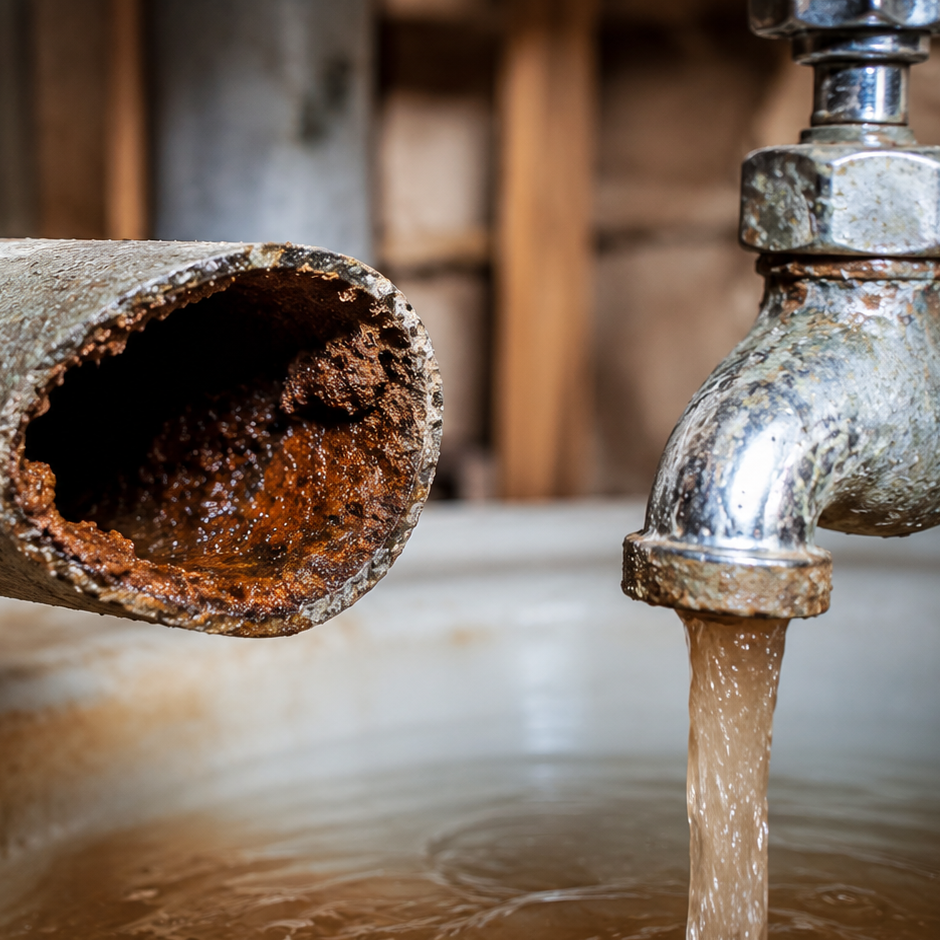
Quick Answer: Galvanized pipes are steel coated with a layer of zinc to resist corrosion. Over decades, that zinc coating wears away, and once it's gone the steel underneath begins to rust. The rust and mineral deposits build up on the inside of the pipe, narrowing it (which restricts flow and lowers pressure), flaking into the water (causing discoloration and metallic taste), and eventually weakening the pipe until it leaks. Because this happens from the inside out, galvanized pipes can look fine outside while failing within. It's gradual but inevitable, which is why old galvanized plumbing is commonly replaced.
Galvanized pipe was the standard in homes for decades, and a lot of older houses still have it. The problem is that it has a built-in expiration: galvanized pipe is designed to work well at first, but breaks down predictably over the years. Understanding why it fails — what's actually happening inside the pipe — explains the discolored water, low pressure, and leaks that show up in homes with aging galvanized plumbing, and why replacing it is so common.
It Starts With a Zinc Coating
Galvanized pipe is steel with a protective coating of zinc. The zinc is the key: it shields the steel from corrosion, since bare steel rusts when exposed to water. When the pipe is new, that zinc layer does its job, and the pipe resists corrosion well. So galvanized plumbing performs fine for years. The catch is that the zinc coating isn't permanent — and once it's gone, the protection it provided goes with it. The whole failure process is really the story of that zinc layer wearing away and what happens to the steel underneath afterward.
The Zinc Wears Away, and the Steel Corrodes
Over decades of water flowing through it, the protective zinc coating gradually wears away. Once the zinc is depleted, the steel underneath is exposed to the water and begins to corrode — to rust. This is the turning point: a galvanized pipe that's lost its zinc is just steel meeting water, and steel rusts. From here, the corrosion proceeds steadily, and because it occurs inside the pipe, where the water is, it's hidden from view. A galvanized pipe can look perfectly sound on the outside while it's rusting and deteriorating within.
Rust and Buildup Choke and Weaken the Pipe
As the steel corrodes, two things happen inside the pipe, and both cause problems.
First, rust and mineral deposits build up on the inner walls, narrowing the passage. This restricts water flow and lowers pressure throughout the home — a classic symptom of old galvanized pipe. The interior can gradually close up until the flow is badly reduced.
Second, rust and corrosion flake off into the water. This is what causes the brown, yellow, or discolored water and the metallic taste that homes with failing galvanized pipes often see. You're literally getting bits of the corroding pipe in your water.
And third, as the corrosion eats into the pipe wall, the pipe weakens. Eventually, it corrodes enough to leak, and because the deterioration is throughout the system, leaks tend to recur in different spots once a galvanized system starts going.
| Stage | What happens | Symptom |
|---|---|---|
| New pipe | Zinc coating protects the steel | Works fine |
| Zinc wears away | Coating depletes over decades | Trouble begins |
| Steel corrodes | Rust forms inside the pipe | Internal deterioration |
| Buildup narrows pipe | Rust/minerals restrict flow | Low water pressure |
| Rust flakes into water | Corrosion enters the supply | Discolored, metallic water |
| Pipe wall weakens | Corrosion eats through | Leaks, recurring failures |
Why Galvanized Is Commonly Replaced
Because this process is gradual but inevitable, galvanized plumbing has a finite life, and once it starts failing, the problems compound. The low-pressure, discolored water, and leaks aren't isolated faults — they're the same corrosion showing up in different ways, and they'll keep coming as long as the old pipe is in place. That's why repiping old galvanized pipes with a modern material is so common: it replaces a system that's corroding from the inside with pipe that won't rust, clog, or discolor the water. For a home with an aging galvanized pipe showing these signs, replacement addresses the root cause rather than chasing symptoms. A plumber can confirm whether your home has galvanized pipe and assess how far along its decline is.
If your home was plumbed with galvanized pipe and you're seeing discolored water or dropping pressure, those aren't separate problems to troubleshoot individually — they're the pipe corroding from the inside. Recognizing them as one underlying issue points you toward repiping rather than a series of partial fixes.
Frequently Asked Questions
Galvanized pipes are steel coated with zinc to resist corrosion. Over the decades, that zinc coating wears away, and once it's gone, the exposed steel begins to rust. The rust and mineral buildup narrow the pipe and restrict flow, flaking into the water causing discoloration and a metallic taste, and weaken the pipe wall until it leaks. Because the corrosion happens inside the pipe, it's hidden from view. The failure is gradual but inevitable once the protective zinc is depleted.
Because the inside of the pipes is corroding, and that rust is entering your water. Once the zinc coating wears away, the steel rusts, and bits of that rust and corrosion flake off into the water supply, producing brown, yellow, or reddish water and a metallic taste. It's a direct sign that the galvanized pipe is deteriorating internally. Discolored water from galvanized plumbing typically means the pipes are well into their decline and the home is a candidate for repiping.
Yes. The corrosion in galvanized pipe occurs on the inside, where the water flows, so a pipe can look perfectly sound on the outside while it's rusting, clogging, and weakening on the inside. That's part of what makes galvanized failure deceptive — the visible exterior doesn't reflect the internal deterioration. Symptoms like low pressure, discolored water, and leaks are often the first outward signs of corrosion that has been progressing inside the pipe for some time.
As galvanized steel corrodes from the inside, rust and mineral deposits build up on the pipe’s inner walls, gradually narrowing the passage through which water flows. That restriction reduces flow and lowers pressure throughout the home. Over time, the interior can close up significantly, badly cutting pressure. It's a classic symptom of aging galvanized plumbing, and because it's caused by internal corrosion and buildup, repiping is often what restores proper pressure.
When galvanized pipe is aging and showing signs of failure — low pressure, discolored water, recurring leaks — replacement is commonly the right move, because the corrosion is system-wide and will keep causing problems as long as the pipe is in place. Repiping with a modern material replaces a system corroding from the inside with a pipe that won't rust, clog, or discolor the water. A plumber can confirm you have galvanized pipe and assess how far its decline has progressed.
A Built-In Expiration, From the Inside Out
Galvanized pipes fail because their protective zinc coating wears away over decades, leaving the steel underneath to rust. That corrosion builds up inside the pipe — narrowing it and dropping pressure, flaking into the water and discoloring it, and weakening the wall until it leaks. Because it all happens from the inside out, the pipe can look fine while failing from the inside. The decline is gradual but inevitable, and the symptoms are one problem wearing many faces. That's why aging galvanized plumbing is so commonly replaced with a modern material that won't corrode the same way, restoring clean water, full pressure, and ending recurring leaks in a single project.
Dealing with old galvanized pipes and bad water? — Get them replaced with a fast, expert repipe from a local repiping specialist. PEX Plumbing & Repiping serves Portland, Beaverton, Tigard. Call (971) 232-3079.
